

One of the most fascinating aspects of jewelry is the endless possibilities for its metal composition. From costume jewelry made with cheaper base metals like stainless steel or titanium, to fine jewelry crafted from precious metals like silver and gold, most pieces aren’t made of just one metal. In fact, single-metal jewelry is pretty rare.
When it comes to silver jewelry in particular, there are several common alloys (metal mixtures) that vary in purity. Each has its own name, percentage of silver, and common uses. Whether you’re buying or selling jewelry, flatware, or coins, understanding silver alloys can help you better identify and value your items.
Silver Purity Ratings
Just like gold purity is expressed in karat ratings, silver has its own ranking system that uses 3-digit markings:
- 999 | Fine Silver/Pure Silver: 99.9% silver, used to make bullion coins and bars
- 958 | Britannia Silver: 95.84% silver and 4.16% copper/other metals
- 950 | French 1st Standard: 95% silver and 5% copper/other metals
- 947, 916, or 875 | Zolotnik Russian Silver: 94.79%, 91.66%, or 87.5% silver and 7.5%, 8.34%, or 12.5% copper/other metals
- 925 | Sterling Silver: 92.5% silver and 7.5% copper/other metals (the most common alloy for jewelry)
- *If you encounter a gold piece with a 925 stamp, it’s likely gold vermeil (sterling silver plated with gold)
- 900 | Coin Silver: 90% silver and 10% copper/other metals
- 830 | Scandinavian Silver: 83% silver and 17% copper/other metals
- 800 or 835 | German Silver: 83.5% or 80% silver and 16.5% or 20% copper/other metals
Sterling Silver: The Jewelry Standard
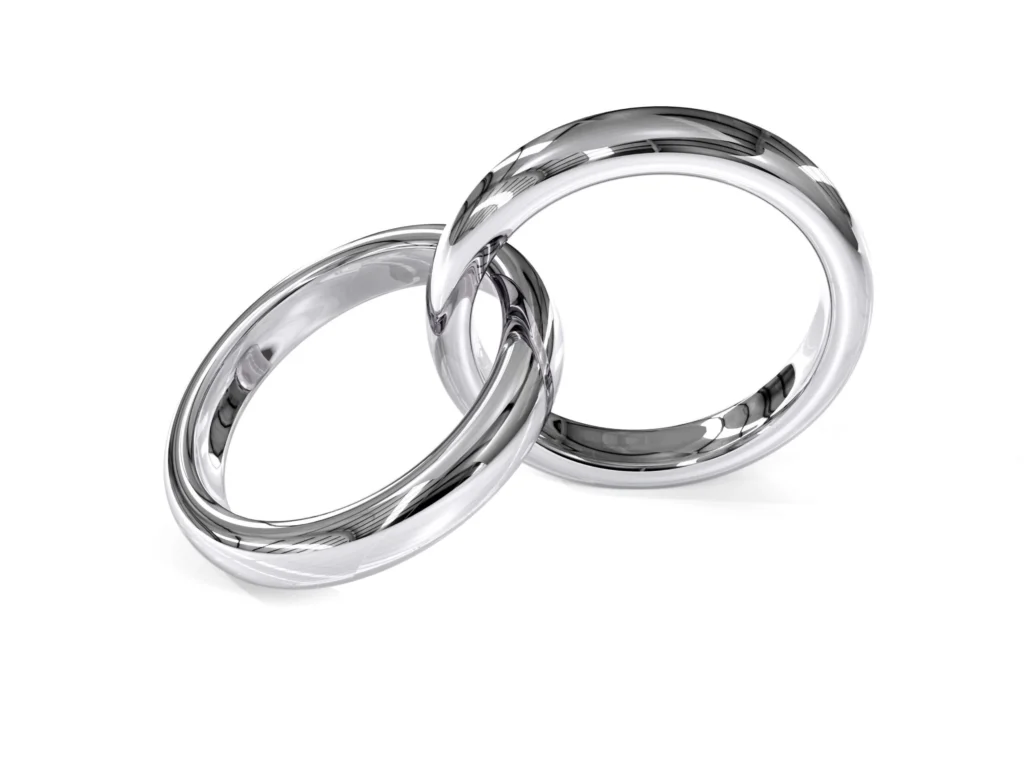
Sterling silver is the most common type of silver jewelry because it offers a good balance of purity and strength. Pure silver – which is often used for bullion coins and bars – is quite soft and can be easily scratched or dented. For bullion items that sit safely in storage most of the time, the fragility isn’t much cause for concern – just handle with care. But for jewelry that’s worn often or daily, fine silver is not practical. This is why most silver jewelry is made from a combination of pure silver and harder, cheaper base metals like copper. Combining softer, precious metals like silver or gold with harder base metals results in an alloy that’s much more durable, both in terms of strength and resistance to tarnishing.
Silver jewelry certainly has its perks: it’s affordable, long-lasting and versatile. While all silver jewelry will eventually tarnish, there are plenty of ways to clean and polish it to restore the original shine.
From a jewelry-making standpoint, silver is trickier to work with than gold because it conducts heat so efficiently. Novice metalsmiths often learn to solder using silver first – almost like learning to drive in an SUV before a compact car.
The Everyday Precious Metal
People tend to think of silver as gold’s cheaper cousin, but it may have actually been valued more highly than gold throughout different times in history! Ancient temple inscriptions suggest that this was the case throughout much of Egypt’s past. Silver has been used as an exchange medium in the form of ingots, coins, jewelry and more for millennia, and it remains one of the world’s most important metals today. In fact, it has a fascinating range of uses – from solar panels to mirrors, batteries, auto glass defogger, medical applications and much more.
Selling Your Silver Jewelry
While purity stamps are a great indicator of how pure your silver jewelry is, the most definitive way to evaluate its worth is through an assay – a procedure conducted at a precious metals refinery like Garfield. Our experts will melt and test your material in our lab, and then provide you with a detailed report outlining the alloy’s composition. We’ll then calculate your payment based on current metal prices.
If you ever find yourself with unwanted silver jewelry, cufflinks, buttons, trinkets, flatware, coins, or even dental scrap that you’d like to monetize, Garfield can streamline the process and ensure maximum value for your items.
Established in 1892, Garfield Refining has more than a century of experience refining precious metals. We serve clients of all types, including individual sellers, dental offices, jewelers, pawnbrokers, and more!
Ready to sell your silver, gold, platinum or palladium? Get started today with a free shipping label!