
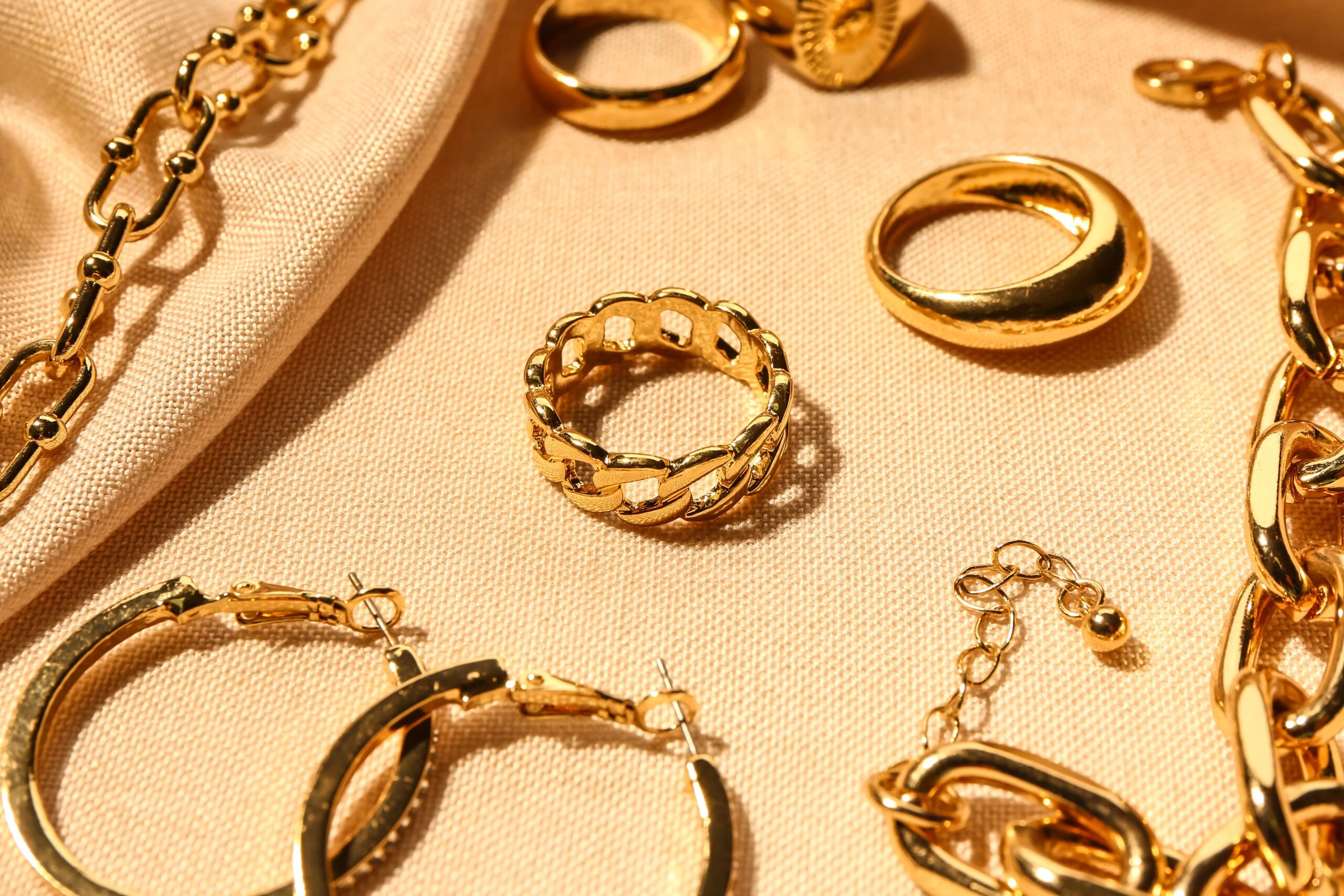
When it comes to gold jewelry, there’s a lot of jargon to decode. Gold-plated, gold-filled, gold vermeil, solid gold: what’s the difference? Check out our guide to different types of gold jewelry and you’ll be an expert in no time. But today we’re focusing on a French classic: gold vermeil.
Gold vermeil is a unique form of jewelry because it’s made of two different precious metals: gold and silver. It offers that luxurious gold aesthetic without breaking the bank, and it’s durable because it’s made of sterling silver rather than cheaper base metals.
What is Gold Vermeil?
The term “vermeil” (pronounced ver-may) is French for gilded silver, which refers to any silver object covered with a layer of gold. A more old-school term for vermeil is “silver-gilt.”
Gold vermeil was originally invented in 18th-century France as a more affordable alternative to solid gold. The early French goldsmiths used the technique of fire gilding, which involved using mercury to different metals together. This practice has since been replaced by safer methods to reduce the risk of mercury poisoning. These days, electroplating is the standard method for crafting vermeil jewelry – more on that soon.
Composition and Purity
In order for an item to be legally marketed as gold vermeil in the U.S., it must be composed of a sterling silver base (92.5% pure silver, 7.5% copper/other metals), and then coated with a layer of gold that’s at least 2.5 microns thick. While 2.5 microns may not sound like much, in jewelry terms it’s substantial -much thicker than standard gold plating, which is usually less than 1 micron.
The gold layer itself can vary in purity, but it must be at least 10 karats (41.7% pure gold). The coating is typically applied through electroplating. This process uses a solution containing gold ions and an electric current to evenly deposit a thin layer of gold onto the silver base. Electroplating has been a standard practice in jewelry-making for well over a century – it’s also commonly used to apply rhodium onto white gold and platinum jewelry to enhance brightness and durability.
Gold Vermeil vs Gold-Plated, Gold-Filled and Solid Gold
The type of gold jewelry – whether plated, filled, vermeil, or solid – describes an item’s structure and composition, indicating how much gold it contains relative to the base metals. The karat rating, on the other hand, describes the purity of that gold. Gold comes in different purity levels, measured in karats.
For example, when shopping for a gold ring, you might encounter:
- Gold-plated: 10k, 14k, 18k, 22k
- Gold-filled: 10k, 14k, 18k, 22k
- Gold vermeil: 10k, 14k, 18k, 22k
- Solid gold: 10k, 14k, 18k, 22k
You may even come across 24k options – however, 24k gold jewelry is somewhat rare because it’s fragile. Pure gold is very soft on its own and can get scratched or dented easily, which is why gold is usually mixed (alloyed) with other metals.
Authentic gold vermeil jewelry should contain a “925” stamp to indicate its sterling silver base. Some pieces will also include a karat mark to denote the purity of the gold portion.
Benefits of Gold Vermeil
Vermeil is often described as “demi-fine” because it’s more affordable than solid gold, yet the sterling silver base is a major upgrade from the cheaper metals (ex. brass, copper, nickel, zinc) that are typically used in gold-plated and gold-filled jewelry. It’s also a smart option for people with sensitive skin; sterling silver and gold are generally considered hypoallergenic.
Durability is another pro, as sterling silver will last a lifetime with proper care. While sterling silver will tarnish eventually, it can always be polished to restore its original shine. And with vermeil, the added layer of gold on top serves as a protective barrier, making the piece more tarnish-resistant and long-lasting.
Buying Gold Mindfully
Gold vermeil jewelry can last for several years or even longer with proper care. Eventually, the gold layer will begin to wear off, exposing the silver layer beneath. But depending on your style, this might not be the worst thing! You could have a gold ring that lasts a few years before evolving into a more silver-y version of itself – almost like it’s taking on a second life.
All in all, vermeil is a great choice for quality jewelry that won’t break the bank. Plus, more brands are starting to prioritize sustainably-sourced materials like recycled gold and silver, lab-grown gemstones and more. If you’re feeling inspired to add some vermeil to your collection, check out our guide to sustainable jewelry brands!
Caring for Precious-Metal Jewelry
No matter the type – gold, silver, platinum, or vermeil – proper care helps keep your jewelry looking its best. The key principles are simple:
- Avoid harsh chemicals: Perfume, cleaning products, chlorine, and even some cosmetics can dull or damage metal finishes.
- Limit exposure to moisture: Water, sweat, and humidity accelerate tarnishing.
- Store it properly: When not in use, keep jewelry in a soft pouch or lined box to prevent scratches and oxidation.
Selling Gold Vermeil: How to Get the Highest Payment
If you ever end up with unwanted gold vermeil that you’re looking to sell, be sure to work with a reputable precious metals refinery. Most gold buyers who aren’t refineries lack the specialized equipment to perform an assay – a metallurgical test that determines the exact breakdown of metals in an alloy. Without an assay, your items could be undervalued. Refineries like Garfield, however, use this process to give you the most accurate valuation, ensuring you receive the highest possible payment.
Garfield Refining accepts all precious metals, including gold, platinum, palladium and silver. In fact, we have a long history with silver: in addition to recovering precious metals, we used to manufacture silverware until 1951! Whether your items contain a single precious metal or a mix, we’ll make sure you’re paid for the full value of each one.
Trusted since 1829, Garfield is known for providing award-winning service and industry-leading payouts. If you have precious metal scrap to sell – whether it’s jewelry, flatware, dental gold or something else – we’re here to help you get the highest return.
Questions about precious metals or how the refining process works? Call us at 88-677-9254 to chat with an expert today!
Ready to refine your precious metals? Get started today with a free shipping label!
Written by
Allie BowmanAllie Bowman is the Content Lead at Garfield Refining, where she translates more than 130 years of precious metals expertise into clear, accurate, and practical content for individual sellers, dental professionals, jewelers, and collectors. A Dean's List graduate of the University of Delaware's Media Communication program, Allie has built her career around making complex subjects accessible to a broad audience. Her experience spans nutrition science, lifestyle magazine publishing, and precious metals refining, giving her a unique ability to transform technical information into engaging, trustworthy content. At Garfield, Allie brings editorial rigor and subject-matter expertise to every piece she produces. She works closely with Garfield's refining specialists and senior leadership to ensure that technical topics - from karat markings and assay methods to precious metals markets and spot price mechanics - are explained with both accuracy and clarity. Since joining Garfield's marketing team, Allie has written extensively on precious metals refining, dental scrap recovery, gold and silver bullion, estate and inherited jewelry, and industry-specific topics for dental and jewelry professionals. All content is reviewed by Garfield's leadership team prior to publication, ensuring it reflects the company's standards for accuracy, transparency, and industry expertise.
Reviewed by
Morgan KerrisseyMorgan Kerrissey is the President of Garfield Refining, one of North America's most longstanding and trusted precious metals refineries. For over two decades, Morgan has built his career at the intersection of commodities markets, metallurgy, and precious metals — earning a reputation as one of the most knowledgeable voices in the refining industry. Morgan joined Garfield in 2008, bringing rigorous operational discipline to a company built on exacting standards since 1892. Named President in 2014, he has guided Garfield through volatile gold, silver, and palladium markets, while modernizing its workforce and technologies and diversifying its metal supply chains. Under his leadership, Garfield has expanded its refining capabilities across the full lifecycle of precious metals recovery, entered new markets, and expanded services while maintaining the same customer forward approach that has made Garfield a mainstay for more than a century. From hedging strategy to daily refinery operations, Morgan commands high levels of technical depth and market fluency. Morgan grew up outside Boston, graduated from Harvard University, and has lived with his family in Philadelphia, PA for almost 20 years.