
Last Updated: August 14, 2026
Many people go their whole lives without thinking about dental scrap refining. But if you’ve ever had a metal implant placed, you may wonder what happens if it’s eventually extracted for replacement. Will it simply be tossed in the trash? Is it worth keeping?
Common restorations like crowns and bridges often contain precious metals like gold, silver, platinum and palladium. Not only are precious metals great for long-term dental repairs, but they can be worth a pretty penny.
What is Dental Scrap?
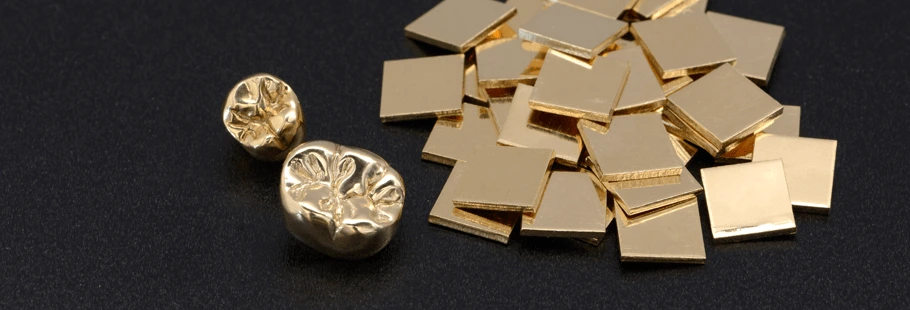
Precious metal dental scrap includes a range of materials: such as crowns and bridges, PFMs, inlays/onlays and more. When a patient has a gold crown removed, for example, they can choose to keep it and send it to a precious metals refinery for cash. Dentists also commonly save extracted materials and recycle them through trusted refineries.

What is Refining?
Precious metals refining is essentially an advanced form of recycling. Metals like gold, silver, platinum and palladium can be melted down, purified, and reused infinitely – without ever losing quality. This is especially important because the Earth has a limited supply of these valuable resources. Recycling unwanted precious metals is both eco-friendly and lucrative.
The refining process involves melting scrap material, extracting impurities, and pouring the purified metals into molds that form bars. The bars are then resold to various manufacturers and used to make things like jewelry, bullion, electronic components, silverware, and of course, more dental implants.
Why Dentists Use Gold
Gold is one of the oldest materials used in dentistry, with restorations dating back to the ancient Etruscans in the 7th century BCE. For much of modern history, gold remained the material of choice – it was considered the “gold standard” throughout the 19th century, until newer alternatives emerged in the late 20th century.
With the rise of more modern, tooth-colored materials like porcelain and zirconium, gold has taken a back seat. But it’s highly unlikely that dental gold will ever disappear completely, because it still has major advantages. Dentists still favor gold alloys at times because they offer superior biocompatibility, corrosion resistance and long-term durability. Gold is also soft and highly malleable, making it ideal for crafting precise, custom-fit restorations. And when a crown fits perfectly, it’s less likely to cause infections or complications.
While gold crowns, bridges, and inlays/onlays may cost more upfront, they often pay off in the long run. Thanks to gold’s exceptional durability, patients can avoid the recurring costs of replacing porcelain restorations that may wear down or break over time.
Refining Gold Crowns & Bridges
Crowns and bridges are among the most common types of gold dental restorations. A dental crown restores a decayed or damaged tooth, while a bridge is used to replace one or more missing teeth. Some crowns are made completely of metal, while others contain both porcelain and metal (PFM = porcelain-fused-to-metal).
While the term “gold crown” is common, gold crowns and bridges are never made of pure gold. They actually contain a combination of gold and other metals like silver, platinum, palladium, copper, zinc and more. Pure gold is too soft on its own to withstand daily chewing and biting, so other the metals are added to enhance strength. Much like gold, white precious metals like platinum and palladium also provide great biocompatibility and durability.
Getting the Most for Your Dental Scrap
If and when you have dental scrap to recycle, it’s smart to work with a trusted refinery like Garfield Refining. This is the best way to get the highest payment for your metals.
It’s virtually impossible to assess the value of dental scrap without a melt and assay, a procedure performed at a precious metals refinery. This can only be done once the metal is melted down and transformed into a homogeneous state, so that an accurate sample of the alloy can be tested. Assays provide a detailed breakdown of the material’s components, identifying each metal present and their quantities.
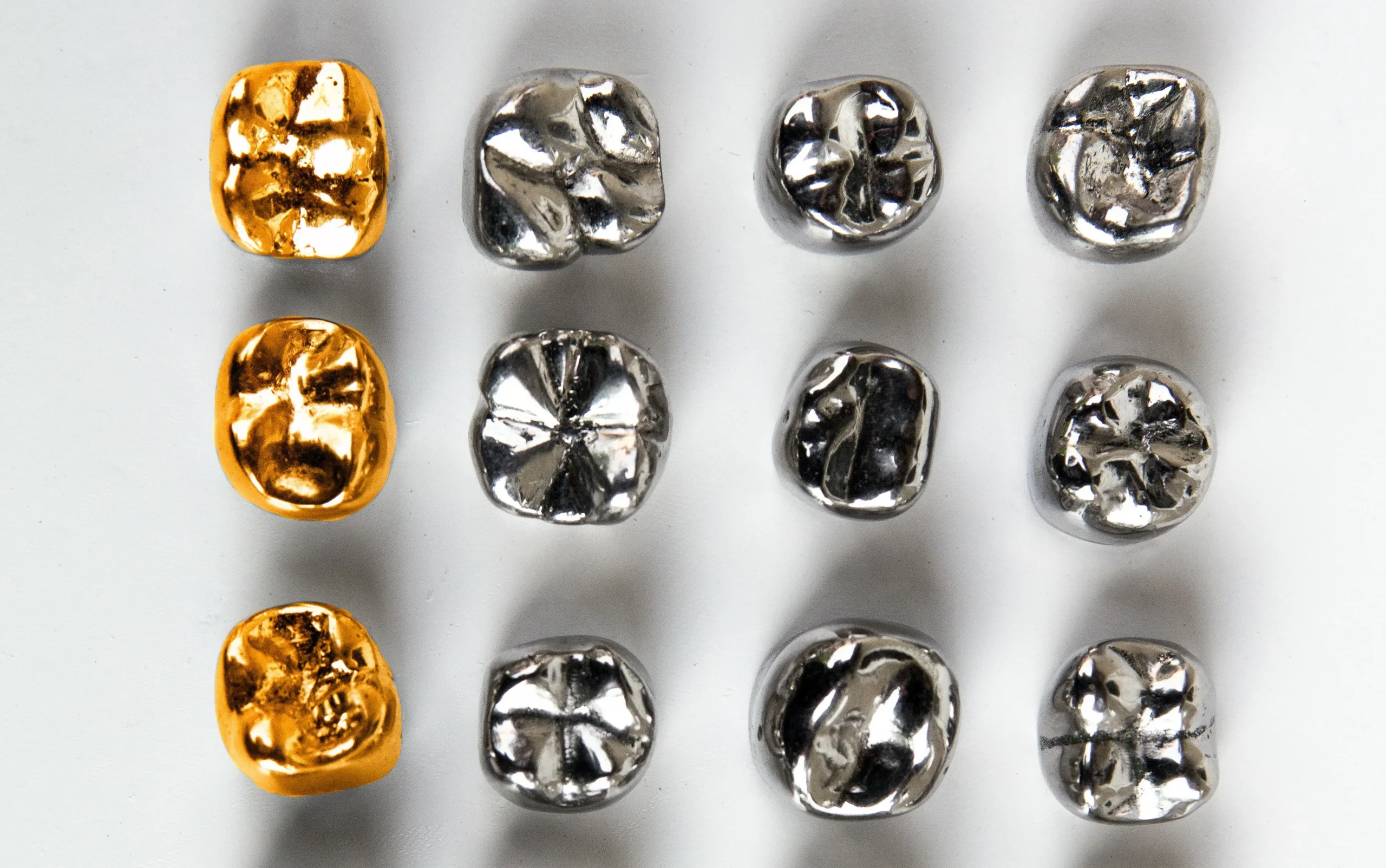
Online gold scrap calculators may give you a rough value estimate based on weight, but these tools often overlook key factors and can differ significantly from your scrap’s actual worth.
Garfield makes it simple. Jessica Kolber, our Director of Account Services, explains: “When your material arrives at our facility, you’ll receive a confirmation email letting you know it’s been received. The material is then sent to our on-site refinery, where we extract the precious metals contained within it. Once the refining process is complete, you’ll receive a valuation report detailing the precious metals recovered from your material, along with a breakdown of their value.”
Always Work Directly with a Refinery
Make sure to avoid middleman gold buyers who will take their own cut from your payout. If a gold scrap buyer is not a refinery, they will ultimately need to resell your scrap to a refinery in order to obtain any value from it. Because of this, they’ll significantly underpay for the metals to protect their own profit margins. Avoid these extra fees by working directly with a trusted refinery!
Garfield Refining has been serving dentists, dental labs and individual sellers since 1892. Leading dentists agree that we’re the best in the business – that’s why we’ve been voted Best Refiner by Dentaltown Magazine for 14 years in a row.
If you’re looking to refine your dental gold, Garfield makes the process easy. Download a free, insured shipping label to get started today!
Written by
Allie BowmanAllie Bowman is the Content Lead at Garfield Refining, where she translates more than 130 years of precious metals expertise into clear, accurate, and practical content for individual sellers, dental professionals, jewelers, and collectors. A Dean's List graduate of the University of Delaware's Media Communication program, Allie has built her career around making complex subjects accessible to a broad audience. Her experience spans nutrition science, lifestyle magazine publishing, and precious metals refining, giving her a unique ability to transform technical information into engaging, trustworthy content. At Garfield, Allie brings editorial rigor and subject-matter expertise to every piece she produces. She works closely with Garfield's refining specialists and senior leadership to ensure that technical topics - from karat markings and assay methods to precious metals markets and spot price mechanics - are explained with both accuracy and clarity. Since joining Garfield's marketing team, Allie has written extensively on precious metals refining, dental scrap recovery, gold and silver bullion, estate and inherited jewelry, and industry-specific topics for dental and jewelry professionals. All content is reviewed by Garfield's leadership team prior to publication, ensuring it reflects the company's standards for accuracy, transparency, and industry expertise.
Reviewed by
Morgan KerrisseyMorgan Kerrissey is the President of Garfield Refining, one of North America's most longstanding and trusted precious metals refineries. For over two decades, Morgan has built his career at the intersection of commodities markets, metallurgy, and precious metals — earning a reputation as one of the most knowledgeable voices in the refining industry. Morgan joined Garfield in 2008, bringing rigorous operational discipline to a company built on exacting standards since 1892. Named President in 2014, he has guided Garfield through volatile gold, silver, and palladium markets, while modernizing its workforce and technologies and diversifying its metal supply chains. Under his leadership, Garfield has expanded its refining capabilities across the full lifecycle of precious metals recovery, entered new markets, and expanded services while maintaining the same customer forward approach that has made Garfield a mainstay for more than a century. From hedging strategy to daily refinery operations, Morgan commands high levels of technical depth and market fluency. Morgan grew up outside Boston, graduated from Harvard University, and has lived with his family in Philadelphia, PA for almost 20 years.