
Last Updated: August 17, 2026
If you’re a dentist who replaces crowns, bridges and other restorative implants, you’re likely collecting precious metal scrap on a regular basis. This material that holds great potential value – but with the numerous demands of running a practice, chances are that scrap recycling isn’t first on your to-do list. However, refining your dental scrap regularly is a great way to add extra revenue straight to your bottom line.
Upsides of Frequent Refining
There are several reasons not to hoard your precious metal scrap. Precious metals like gold, platinum, and palladium see frequent price swings, and consistent refining helps you avoid the guesswork of “timing the market.” Refining at routine intervals aligns with Dollar-Cost Averaging, a proven investment strategy that minimizes the impact of market fluctuations.
That said, if you’re convinced that precious metal prices are headed higher, you can always exchange your refined scrap for bullion coins or bars, which are much easier to liquidate down the road.
A steady refining schedule can also streamline office operations, simplifying your administrative workload.
With a refining routine, you can create a seamless system where no scrap goes unnoticed. Refineries like Garfield Refining make the process easy, providing free collection materials, insured shipping, and convenient in-office pickups. Moreover, your staff doesn’t have to waste time talking to every cash buyer who walks into the office.
Finally, the longer you hold onto your precious metals, the greater the risk that they are lost, discarded, or even stolen. Refining often, even in small amounts, reduces these risks.
How Often Should I Refine?
Garfield Refining has specialized in dental scrap refining for decades. We asked members of our dental team to share what’s typical when it comes to refining schedules for dentists: “There’s no single refining schedule that works best for every practice. The value of dental scrap depends heavily on the specific metal alloys used in the crowns and restorations being removed, so no two shipments will ever be exactly the same,” explains Jessica Kolber, Director of Account Services. “We find that most practices prefer to refine their dental scrap at least once per year. Practices that generate a higher volume of scrap, including oral surgery practices, often choose to refine every three to six months. Since we don’t have any minimum volume requirements, the timing ultimately comes down to each practice’s preferences and needs.”
The 2025 Gold Rush
Gold’s recent record-breaking prices have sparked more interest in dental scrap from cash buyers. Chuck Kindler, Associate Director of External Dental at Garfield Refining, has observed this trend firsthand. He shares, “It seems like cash buyers are more persistent these days than ever before. I actually stopped by a client’s office today who told me that six cash buyers had visited them just this morning.”
While demand from cash buyers is rising, this unfortunately doesn’t mean that dentists are getting paid more for their scrap. Chuck explains: “Most cash buyers base their offers on the amount of yellow gold they see in scrap jars, but visual assessments are inaccurate. This results in dentists missing out on payment for other valuable metals like silver, platinum, and palladium.”
Unlike opportunistic cash buyers who come looking for scrap when gold prices are high, Garfield Refining has been helping dentists get the most for their scrap for over a century and counting. We know that precious metals always hold significant value, regardless of changing market prices.
Avoid Gold Buying Gimmicks
Cash buyers often visit dental offices and perform on-the-spot “assessments” before making an offer. Don’t fall for it! Even the most impressive-looking spot tests are more razzle dazzle than substance. For example, potential buyers might weigh your scrap on a small scale and perform an “acid test.” While this test – which has been around since the Middle Ages – can confirm gold content, it does not measure purity, and it completely misses any platinum group metals that may be mixed in.
The real question isn’t whether you have gold or not, but how much of it – along with any silver, platinum, or palladium. While performative scrap hunters may be full of magic tricks, their antics rarely help earn you a higher payout.
Cutting Out the Middleman
If a scrap buyer does not represent a precious metals refinery, they’re a middleman. Intermediaries between dentists and refineries will always underpay for precious metals to protect their profit margins. Since they’ll ultimately sell your scrap to a refinery, they need to build in their own fee while also accounting for commodity price risk.
For example: a cash buyer knows that the current spot price of gold may drop before they’re physically able to sell it to a refinery – even if it only takes one day. To offset this risk, cash buyers will discount the price they pay. When you deal directly with a refinery that hedges these risks through a metals trading desk, you can expect a much better price.
A Melt and Assay Is Fundamental
New to the process? Our guide to dental scrap refining breaks down exactly what happens to your material once it reaches a refinery. The melt and assay process is the cornerstone of accurate valuation, providing refineries like Garfield with a detailed compositional breakdown of your scrap. By identifying the specific metals present and their quantities, we calculate a fair payment based on the current market prices of each metal. For instance, many dental implants are made from precious metal alloys that include not only gold but also silver, platinum, and/or palladium.
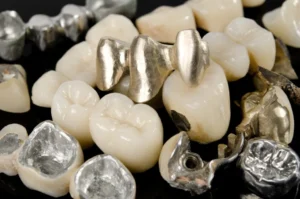
A melt and assay process can’t take place inside a dental office; it can only be done at a refinery. This means that cash buyers are simply guessing the value of your dental scrap when they see it at the office. And for this reason alone, you should never accept an on-the-spot offer for gold or any precious metal item – whether it’s dental scrap, jewelry or something else!
Choosing the Right Refinery
Not all refineries are created equal, so it’s essential to partner with one that has a proven track record of exceptional service and competitive payouts. Respected refineries like Garfield combine advanced technology with skilled technicians to ensure maximum recovery of precious metals from your scrap. Accurate results, especially for procedures like a precious metal assay, rely heavily on the expertise of the team performing the analysis. When it comes to refining, experience matters.
Refining For Your Business and the Planet
Extra revenue generated from refining can unlock new opportunities for your dental practice. Whether the profits are used to pay employee bonuses, upgrade equipment, boost marketing budgets, or simply treat the team, the possibilities are endless.
While instant cash offers from middleman buyers may be tempting, a fair price for your precious metal is always worth the wait. With Garfield, for example, you’ll receive payment via check, direct deposit, or wire transfer – typically within just 1-3 business days.
Beyond the financial benefits, scrap refining is a green business practice. By recycling and reintroducing precious metals into the market, you’re contributing to a more sustainable supply chain and reducing waste. It’s a win-win!
Are you a dental professional looking to refine your precious metal scrap? We’re here to help – start refining with us today to see why dentists have trusted Garfield for over a century. Get started by downloading a free, insured shipping label!
Written by
Allie BowmanAllie Bowman is the Content Lead at Garfield Refining, where she translates 134 years of precious metals expertise into clear, accurate, and practical content for individual sellers, dental professionals, jewelers, and collectors. A Dean's List graduate of the University of Delaware's Media Communication program, Allie has built her career around making complex subjects accessible to a broad audience. Her experience spans nutrition science, lifestyle magazine publishing, and precious metals refining, giving her a unique ability to transform technical information into engaging, trustworthy content. At Garfield, Allie brings editorial rigor and subject-matter expertise to every piece she produces. She works closely with Garfield's refining specialists and senior leadership to ensure that technical topics - from karat markings and assay methods to precious metals markets and spot price mechanics - are explained with both accuracy and clarity. Since joining Garfield's marketing team, Allie has written extensively on precious metals refining, dental scrap recovery, gold and silver bullion, estate and inherited jewelry, and industry-specific topics for dental and jewelry professionals. All content is reviewed by Garfield's leadership team prior to publication, ensuring it reflects the company's standards for accuracy, transparency, and industry expertise.
Reviewed by
Morgan KerrisseyMorgan Kerrissey is the President of Garfield Refining, one of North America's most longstanding and trusted precious metals refineries. For over two decades, Morgan has built his career at the intersection of commodities markets, metallurgy, and precious metals — earning a reputation as one of the most knowledgeable voices in the refining industry. Morgan joined Garfield in 2008, bringing rigorous operational discipline to a company built on exacting standards since 1892. Named President in 2014, he has guided Garfield through volatile gold, silver, and palladium markets, while modernizing its workforce and technologies and diversifying its metal supply chains. Under his leadership, Garfield has expanded its refining capabilities across the full lifecycle of precious metals recovery, entered new markets, and expanded services while maintaining the same customer forward approach that has made Garfield a mainstay for more than a century. From hedging strategy to daily refinery operations, Morgan commands high levels of technical depth and market fluency. Morgan grew up outside Boston, graduated from Harvard University, and has lived with his family in Philadelphia, PA for almost 20 years.