
Last Updated: June 8, 2026
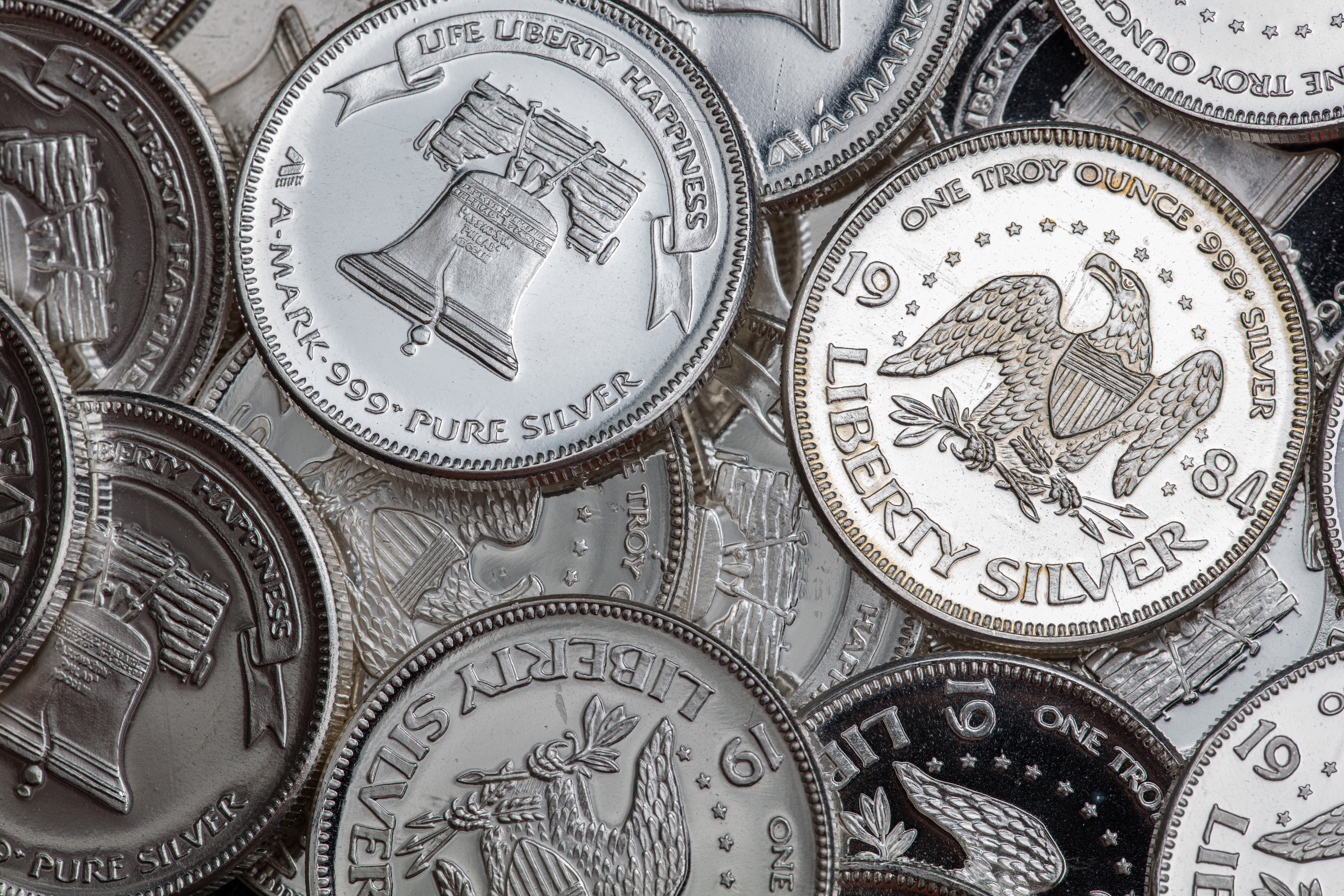
Whether you’re a coin enthusiast, a history buff or just someone who likes money, silver dollars have a rich and fascinating history that’s worth exploring. A lot has happened since the first silver dollars were minted in the late 18th century, and today they’re worth much more than their $1 face value.
When silver dollars first started circulating, their face value matched their intrinsic silver value, so people commonly used them to pay for items like a loaf of bread or a quart of milk. But today, even the scrap metal value alone would make a silver dollar worth at least $30, and certain coins can sell for thousands or even millions of dollars! Here’s a closer look at the history of silver dollars and how much they’re worth today.
The History of the Silver Dollar
It all started with the Coinage Act of April 2, 1792, which established the U.S. Mint and created the U.S. dollar as the nation’s official currency.
In 1794, the very first silver dollars – Flowing Hair Dollars – were minted at the Philadelphia Mint. Only 1,758 of these early coins were made, and one sold at auction for over $10 million in 2013. They were made from an alloy containing 89.2% silver and 10.8% copper.
Flowing Hair Dollars quickly became symbols of national pride, and the sentiment has continued for generations. Over the years, silver dollars have featured iconic figures such as Lady Liberty, presidents, and the Bald Eagle, making them highly collectible. For example, the Liberty Seated Dollar (minted from 1840-1873) can be valued as high as $73,563 today!
Morgan Dollar vs. Peace Dollar
There are two main types of silver dollars that are especially sought after by collectors: the Morgan Dollar and the Peace Dollar. Both coins carry different cultural significance and design appeal.
Morgan Dollar
The Morgan Dollar was first minted from 1878-1904, and then again in 1921. It was designed by George T. Morgan, a British engraver who came to America for the job. The coin features Lady Liberty and an eagle, and it was nicknamed the “cartwheel” dollar because of its large size and heavy weight. Morgan Dollars remain popular due to their history, intricate design, and the variety of mint marks that can be found on different coins.
Peace Dollar
Minted from 1921-1935 (plus a special issue in 1965), the Peace Dollar commemorates the end of World War I and symbolizes peace. Designed by Anthony de Francisci, it features Lady Liberty and a resting eagle. Its historical significance and beautiful design make it highly collectible today.
How Much is a Silver Dollar Worth?
The value of silver dollars can vary widely depending on several factors, including age, rarity, condition, and silver content. For instance, an 1895 Morgan Dollar with no mintmark can sell as high as $30,000, whereas a 1921 Peace Dollar might fetch around $100 at auction.
Intrinsic Value
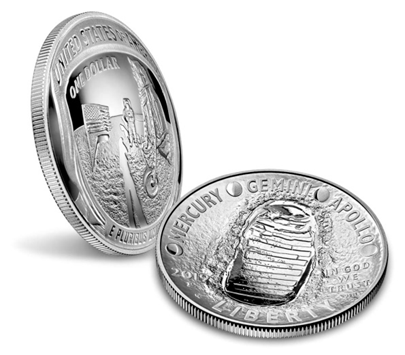
Intrinsic comes from the precious metal that a coin contains. Historically, most silver dollars consisted of 90% silver and 10% copper. But starting in 2019, the U.S. Mint raised the purity standard to 99.9% pure silver, starting with 2019-P Apollo 11 50th Anniversary Silver Dollar!
Intrinsic metal value (aka “melt value”) is determined by the spot price of silver, which fluctuates daily. For instance, a 2021 Morgan Silver Dollar weighs 0.858 troy ounces. With silver priced at $47.64 per ounce (as of October 22, 2025), its melt value would be $40.87.
While intrinsic value is important for investors, older coins often have historical or collectible value that exceeds the metal content.
Numismatic Value
Numismatic value refers to a coin’s value beyond its silver content, based on factors like the following.
Rarity: Coins with low mintages or historical significance are highly sought after.
Condition/Grade: Collectors and grading agencies, like PCGS, assess factors such as wear, damage, and the overall preservation of the coin. Coins in mint or uncirculated condition command higher prices.
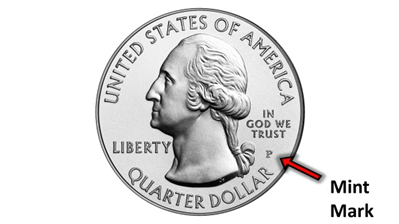
Design and Variety: Unique designs, minting errors, or special editions can increase value.
Mint Marks:
Silver dollars were minted in several cities besides Philadelphia, including New Orleans, San Francisco, Carson City, and Denver. Carson City coins are particularly rare and loved by collectors.
Modern Silver Eagles
Modern American Silver Eagles (first issued in 1986) continue the silver dollar tradition. Each coin contains one ounce of 99.9% pure silver and is technically legal tender with a $1 face value. But with today’s silver prices, they’re obviously worth more than $1 – closer to $50! Prized by many for their reliability and wide recognition in the global market, Silver Eagles are among our best-selling bullion coins here at Garfield Refining.
Appraising Silver Dollars
The world of silver dollars combines a unique blend of history, artistry, and financial potential – making them priceless treasures for collectors and investors alike. Whether you’re looking to buy, sell, or simply evaluate a coin, it’s important to conduct thorough research and seek professional appraisals.
Buying and Selling Silver Coins
At Garfield Refining, we purchase silver in a variety of forms – from bullion coins and bars to scrap metal from jewelry, flatware, collectibles, and even dental material.
We also offer a wide selection of bullion coins and bars in silver, gold, and palladium, and we’ll buy back any bullion purchased from us (in good condition) at its current market value. That means if metal prices rise, you can easily turn a profit!
Whether you’re looking to monetize your precious metals or expand your silver collection, our team is ready to help with pricing, availability, and convenient shipping options.
Do you have precious metal scrap that you’re looking to monetize? Look no further than Garfield Refining, America’s premier precious metals refinery since 1892. Get started today with a prepaid shipping label!
Written by
Allie BowmanAllie Bowman is the Content Lead at Garfield Refining, where she translates more than 130 years of precious metals expertise into clear, accurate, and practical content for individual sellers, dental professionals, jewelers, and collectors. A Dean's List graduate of the University of Delaware's Media Communication program, Allie has built her career around making complex subjects accessible to a broad audience. Her experience spans nutrition science, lifestyle magazine publishing, and precious metals refining, giving her a unique ability to transform technical information into engaging, trustworthy content. At Garfield, Allie brings editorial rigor and subject-matter expertise to every piece she produces. She works closely with Garfield's refining specialists and senior leadership to ensure that technical topics - from karat markings and assay methods to precious metals markets and spot price mechanics - are explained with both accuracy and clarity. Since joining Garfield's marketing team, Allie has written extensively on precious metals refining, dental scrap recovery, gold and silver bullion, estate and inherited jewelry, and industry-specific topics for dental and jewelry professionals. All content is reviewed by Garfield's leadership team prior to publication, ensuring it reflects the company's standards for accuracy, transparency, and industry expertise.
Reviewed by
Morgan KerrisseyMorgan Kerrissey is the President of Garfield Refining, one of North America's most longstanding and trusted precious metals refineries. For over two decades, Morgan has built his career at the intersection of commodities markets, metallurgy, and precious metals — earning a reputation as one of the most knowledgeable voices in the refining industry. Morgan joined Garfield in 2008, bringing rigorous operational discipline to a company built on exacting standards since 1892. Named President in 2014, he has guided Garfield through volatile gold, silver, and palladium markets, while modernizing its workforce and technologies and diversifying its metal supply chains. Under his leadership, Garfield has expanded its refining capabilities across the full lifecycle of precious metals recovery, entered new markets, and expanded services while maintaining the same customer forward approach that has made Garfield a mainstay for more than a century. From hedging strategy to daily refinery operations, Morgan commands high levels of technical depth and market fluency. Morgan grew up outside Boston, graduated from Harvard University, and has lived with his family in Philadelphia, PA for almost 20 years.