
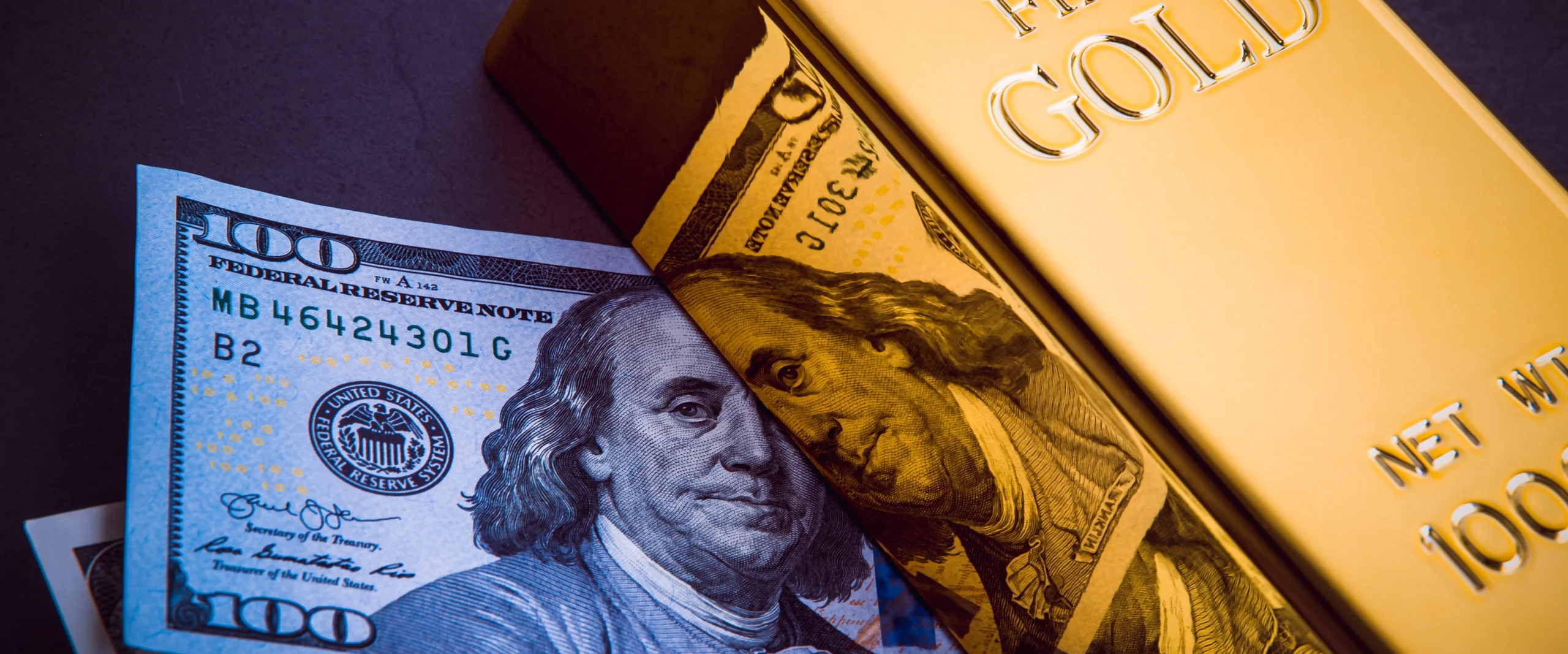
From the hills of ancient Lydia to the bullion aisle at your local Costco, gold has been traded and cherished for thousands of years. Precious metal coins were among the earliest forms of currency, and our country’s monetary system was originally based on physical gold. The gold standard, which tied the dollar to a fixed amount of gold, was used internationally for almost 50 years. But what exactly did the gold standard mean for global economies, and why did we abandon it? Here’s a quick rundown on this fascinating slice of history.
What Was the Gold Standard?
Under the gold standard, the government would let you exchange paper money for physical gold at any given time. From about 1834 until 1933, $20.67 could get you one ounce of gold. The original goal of the gold standard was to provide a stable and universally-trusted monetary system, and it worked for a while – until it didn’t.
The United States adopted the gold standard in several phases, and abandoned it in the same way.
Shifting Standards – From Bimetallic to Gold
Although the U.S. was effectively using the gold standard since the early 1830s, we didn’t officially adopt it until 1873. Before that we had a bimetallic standard, which meant that both gold and silver were considered legal tender. There was a fixed exchange ratio of 15:1 silver-to-gold, and this rate held for many years. Then the Coinage Act of 1834 changed the ratio from about 16:1, which made silver less valuable and gold more attractive. Gold became the dominant metal used as money.
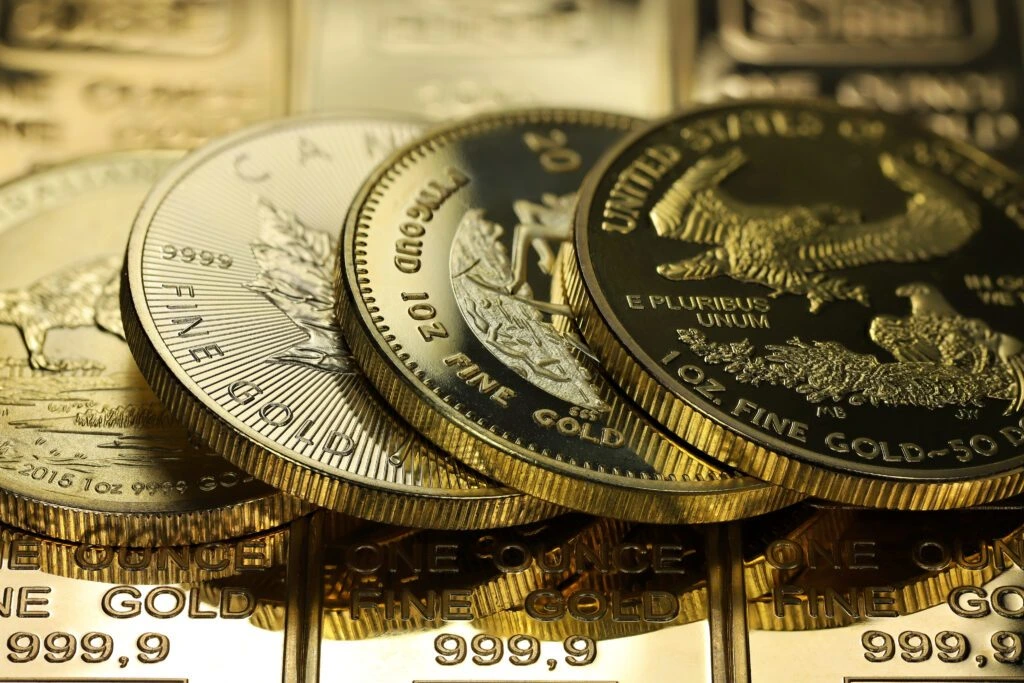
Fast forward 39 years and the Coinage Act of 1873 ended the minting of silver dollars, formally putting the United States on the gold standard. Then in 1900 the Gold Standard Act officially declared gold as the sole standard of value for the U.S. dollar. By this time, most of the world’s other major economies were on the gold standard, including England, Germany, France and Japan. The standard lasted for a while until England permanently abandoned it in 1931.
England Abandons the Gold Standard
The system began to unravel in England when the Great Depression hit and people rushed to trade their paper money in for gold, draining the Bank of England’s gold reserves. Something had to give – and although it seemed crazy at the time, the Bank was eventually left with no choice. They were about to run out of gold, so they severed ties with the gold standard.
Nations around the world began to follow suit. As economies suffered, more and more people exchanged their paper money for gold. The United States first left the gold standard under President Franklin D. Roosevelt in 1933, and then President Richard Nixon fully and permanently ended it in 1971.
FDR Ends the Domestic Gold Standard
Franklin D. Roosevelt initiated phase one of America abandoning the gold standard. It was a difficult decision prompted by the Depression-fueled “mother of all bank runs.” During his first fireside chat on March 12th, 1933, FDR stated “Because of undermined confidence on the part of the public there was a general rush by a large portion of our population to turn bank deposits into currency or gold.”
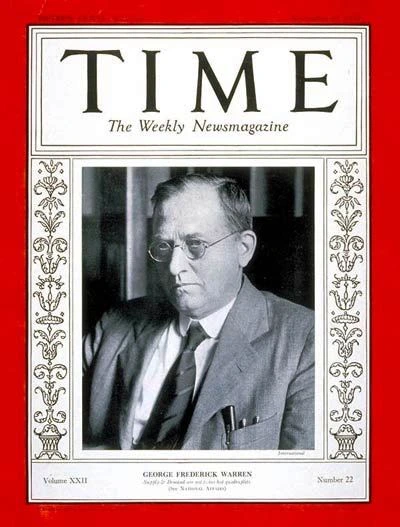
He knew he had to do something about the gold standard, but most of his top economists urged him to stay on it – except for a man named George Frederick Warren Jr., an agricultural economist and professor at Cornell University. Warren advised FDR to abandon the gold standard, and the president listened.
The president declared a national banking holiday and soon banned private ownership of gold coins, bullion, and certificates. Americans were required to turn in their gold to the Federal Reserve in exchange for paper dollars.
This was obviously a huge deal at the time, and many of the president’s advisors disagreed with his decision. But looking back, it may have been for the best. According to Liaquat Ahamed, author of the book Lords of Finance, “Most economists now agree 90% of the reason why the U.S. got out of the Great Depression was the break with gold.”
Gold Reserve Act of 1934
The Gold Reserve Act made it illegal for U.S. citizens to redeem dollars for gold and increased the official gold price to $35 per ounce. This effectively ended the gold standard for Americans, but the U.S. government still used gold to settle international transactions.
The Bretton Woods System
After WWII, world leaders created a new monetary framework called the Bretton Woods System. The U.S. dollar became the world’s reserve currency, backed by gold at $35/oz. Other countries pegged their currencies to the dollar, which they could exchange for gold through the U.S. Treasury. So, while the U.S. stayed on an international gold standard, Americans themselves could no longer exchange dollars for gold.
Nixon Cuts Ties for Good
By the late 1960s, U.S. gold reserves were dwindling quickly as countries like France redeemed gold for their dollars. On August 15, 1971, President Richard Nixon announced the “temporary” suspension of dollar convertibility into gold (known as the Nixon Shock). His goals were to curb inflation and prevent other countries from overburdening the system by exchanging their dollars for gold.
In 1973, the Bretton Woods System was replaced with floating exchange rates, and the dollar became a true fiat currency (backed only by confidence in the U.S. government). This marked the permanent end of the gold standard in the U.S. and around the world.
Gold as Money in 2025
Although the gold standard is long gone, precious metals remain an important part of today’s economy. Gold is still a major financial asset for countries and central banks. Many central banks hold gold as a reserve asset and indicator of economic health, while individual investors continue to view it as a safe-haven asset and portfolio diversifier.
Record-Breaking Gold Prices
Throughout history, gold prices have gone up during times of economic uncertainty. A variety of factors – from geopolitical instability to interest rates and inflation – influence gold prices.
The past several years have been remarkable for metal prices. Gold has hit record after record in 2025, passing the $4k/oz threshold in October. Some analysts even predict that it could reach $5k/oz by the end of 2026! So while it’s certainly a great time to sell your gold, it could also be a smart time to invest.
If you’re interested in selling precious metal scrap (think jewelry, silver flatware, dental crowns and more) or purchasing bullion, look no further than Garfield Refining. Trusted since 1892, we’re known for our top payouts and superior service. That’s why we’ve been voted ‘Best Refiner’ by Dentaltown Magazine for 14 years straight!
Looking to monetize your unwanted gold, silver, platinum or palladium? Garfield Refining makes it easy – get started today with a prepaid shipping label!
Written by
Allie BowmanAllie Bowman is the Content Lead at Garfield Refining, where she translates more than 130 years of precious metals expertise into clear, accurate, and practical content for individual sellers, dental professionals, jewelers, and collectors. A Dean's List graduate of the University of Delaware's Media Communication program, Allie has built her career around making complex subjects accessible to a broad audience. Her experience spans nutrition science, lifestyle magazine publishing, and precious metals refining, giving her a unique ability to transform technical information into engaging, trustworthy content. At Garfield, Allie brings editorial rigor and subject-matter expertise to every piece she produces. She works closely with Garfield's refining specialists and senior leadership to ensure that technical topics - from karat markings and assay methods to precious metals markets and spot price mechanics - are explained with both accuracy and clarity. Since joining Garfield's marketing team, Allie has written extensively on precious metals refining, dental scrap recovery, gold and silver bullion, estate and inherited jewelry, and industry-specific topics for dental and jewelry professionals. All content is reviewed by Garfield's leadership team prior to publication, ensuring it reflects the company's standards for accuracy, transparency, and industry expertise.
Reviewed by
Morgan KerrisseyMorgan Kerrissey is the President of Garfield Refining, one of North America's most longstanding and trusted precious metals refineries. For over two decades, Morgan has built his career at the intersection of commodities markets, metallurgy, and precious metals — earning a reputation as one of the most knowledgeable voices in the refining industry. Morgan joined Garfield in 2008, bringing rigorous operational discipline to a company built on exacting standards since 1892. Named President in 2014, he has guided Garfield through volatile gold, silver, and palladium markets, while modernizing its workforce and technologies and diversifying its metal supply chains. Under his leadership, Garfield has expanded its refining capabilities across the full lifecycle of precious metals recovery, entered new markets, and expanded services while maintaining the same customer forward approach that has made Garfield a mainstay for more than a century. From hedging strategy to daily refinery operations, Morgan commands high levels of technical depth and market fluency. Morgan grew up outside Boston, graduated from Harvard University, and has lived with his family in Philadelphia, PA for almost 20 years.