

Magnetism is a fascinating force that many of us likely learned about in grade school. But unless you’re a physicist, there’s a good chance you haven’t thought a ton about magnetism in a while! A magnetic field is created when an atom’s electrons spin in alignment around the nucleus. The magnetic field can then attract or repel other magnetic materials.
Some of the most commonly known magnetic metals include iron, nickel, cobalt and steel. But along with many other metals, gold is not magnetic. This might sound like bad news if you have a piece of gold jewelry that sticks to a magnet, but don’t worry – there is a caveat.
The Magnet Test for Gold Jewelry
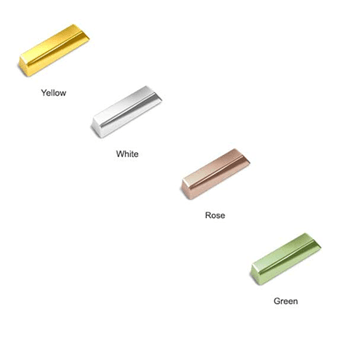
Although precious metals like gold, silver and platinum are not magnetic, jewelry that sticks to a magnet could still hold significant value. What you have might not be pure gold, but rather a gold alloy. The most common gold alloys for jewelry include white gold, yellow gold, rose gold and green gold. In these alloys, gold is sometimes combined with magnetic metals like iron, nickel and cobalt. Therefore a 14k white gold ring, for example, could be magnetic!
Unless you’re testing for pure 24k gold, the magnet test doesn’t actually make sense. Plus, fun fact – magnetic strength in gold alloys can be strengthened or weakened depending on temperature, potentially making the magnet test even less accurate. This is why you should be cautious of any jewelry or gold-buying business that uses the magnet test to identify gold in your items. It’s a fallacy. 18k, 14k and 10k gold jewelry items can still be magnetic depending on which base metals they’re alloyed with, but that doesn’t make them any less valuable.
Pure 24k gold jewelry is not super common anyway, because pure gold is quite soft. It can be easily scratched and/or bent, which is not ideal for jewelry that is worn often or daily. Gold is alloyed with other metals to enhance the strength and durability of jewelry.
Refining Your Gold Alloy Jewelry
The only way to truly determine the composition of a gold alloy is to perform a melt and assay, which is what we do here at Garfield Refining. If you have gold karat jewelry with sentimental or antique value, it’s probably best to hold off on melting it and enjoy the mystery of its exact chemical makeup. But if you have unwanted gold jewelry that you’re looking to monetize, refining is the best way to determine its exact composition and get the highest possible payout for your precious metals!
Consider getting cash for gold and selling your scrap gold now – download a free shipping label today!
Established in 1892, we have over a century of experience refining precious metals. Garfield serves various industries, including dental offices, private individuals, jewelers, pawnbrokers, and more!
Written by
Allie BowmanAllie Bowman is the Content Lead at Garfield Refining, where she translates more than 130 years of precious metals expertise into clear, accurate, and practical content for individual sellers, dental professionals, jewelers, and collectors. A Dean's List graduate of the University of Delaware's Media Communication program, Allie has built her career around making complex subjects accessible to a broad audience. Her experience spans nutrition science, lifestyle magazine publishing, and precious metals refining, giving her a unique ability to transform technical information into engaging, trustworthy content. At Garfield, Allie brings editorial rigor and subject-matter expertise to every piece she produces. She works closely with Garfield's refining specialists and senior leadership to ensure that technical topics - from karat markings and assay methods to precious metals markets and spot price mechanics - are explained with both accuracy and clarity. Since joining Garfield's marketing team, Allie has written extensively on precious metals refining, dental scrap recovery, gold and silver bullion, estate and inherited jewelry, and industry-specific topics for dental and jewelry professionals. All content is reviewed by Garfield's leadership team prior to publication, ensuring it reflects the company's standards for accuracy, transparency, and industry expertise.
Reviewed by
Morgan KerrisseyMorgan Kerrissey is the President of Garfield Refining, one of North America's most longstanding and trusted precious metals refineries. For over two decades, Morgan has built his career at the intersection of commodities markets, metallurgy, and precious metals — earning a reputation as one of the most knowledgeable voices in the refining industry. Morgan joined Garfield in 2008, bringing rigorous operational discipline to a company built on exacting standards since 1892. Named President in 2014, he has guided Garfield through volatile gold, silver, and palladium markets, while modernizing its workforce and technologies and diversifying its metal supply chains. Under his leadership, Garfield has expanded its refining capabilities across the full lifecycle of precious metals recovery, entered new markets, and expanded services while maintaining the same customer forward approach that has made Garfield a mainstay for more than a century. From hedging strategy to daily refinery operations, Morgan commands high levels of technical depth and market fluency. Morgan grew up outside Boston, graduated from Harvard University, and has lived with his family in Philadelphia, PA for almost 20 years.