
Last Updated: June 24, 2026
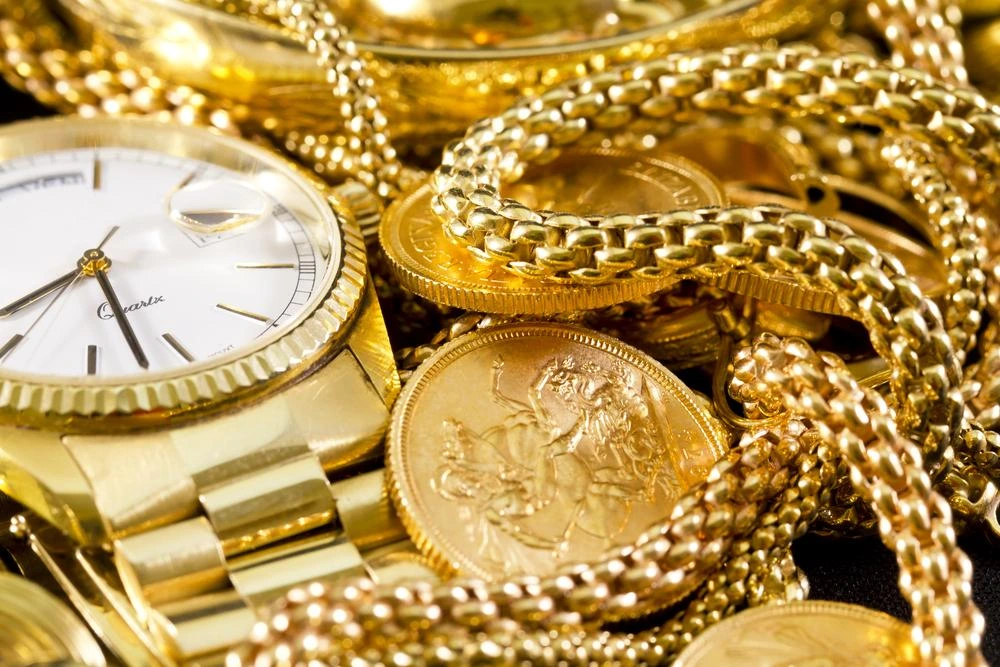
Have you ever sold gold scrap for cash? Unwanted gold items like broken jewelry, an old watch, or even a dental crown could be worth more than you’d think. Gold prices soared above $5,500 in early January – and though they’ve cooled down a bit, today’s prices are still remarkably high. It’s an ideal time to sell precious metal scrap, so here’s your step-by-step guide for getting maximum value.
Step 1: Gather and Sort Your Scrap
Start your at-home treasure hunt: check the bottom of your jewelry box for things like broken chains, mis-matched earrings, spare buttons/cufflinks, or any pieces that you simply don’t want anymore. Go for the gold first, but don’t overlook sterling silver – while not as valuable as gold, silver scrap is worth selling! (Speaking of treasure hunts, check out this fun piece about shipwrecks and sunken treasure).
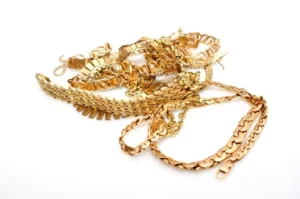
Once you have your scrap collected, try to sort it by purity. Start by looking for karat stamps. These little markings can be hard to see, but a magnifying glass helps. Look for stamps like:
- – 10k
- – 14k
- – 18k
- – GF (gold-filled)
- – V (Vermeil: a layer of gold bonded to sterling silver)
- – 925 (indicates sterling silver and/or gold vermeil)
Purity hallmarks are a great indicator of your jewelry’s gold content, but they’re not always definitive. If an item lacks a stamp yet appears to be genuine gold, it doesn’t hurt to include it with the rest of your scrap for further evaluation.
Step 2: Check Current Gold Prices
Like all commodities, the spot price of gold fluctuates daily. It’s smart to get a gauge on current metal prices before comparing potential buyers. While the exact purity of your scrap cannot be determined without refining it, having a rough ballpark in mind will help you avoid getting underpaid.
Checking gold’s spot price is easy – just search ‘gold price today’ or visit trusted sources like the London Bullion Market Association, The Wall Street Journal, or GarfieldRefining.com. Keep in mind: each day’s posted spot price is quoted for 24k pure gold, measured in troy ounces. Your scrap’s value will depend on purity and weight.
Step 3: Research Refining Companies
Ultimately, all gold scrap gets recycled. This process takes place at a refinery like Garfield Refining, where the metal is melted down, purified (refined), and formed into bars. These bars are then sold to manufacturers who use the gold to make products like jewelry, bullion, and even electronic parts.
One major advantage of selling your gold directly to a refinery is that you’re cutting out the middleman, which yields a substantially higher payout. Selling to a cash-for-gold store may be convenient, but you’ll pay a premium.
Jewelers and Pawnshops
You can also sell your scrap to a local jeweler or pawnbroker. One advantage of these options is the face-to-face interaction, and some shops have professionals who can provide a general assessment of your gold’s purity and value.
However, because they’re not refiners, they typically can’t determine the exact composition of your scrap. That means they may not account for all the precious metals present, which can limit your payout. Additionally, brick-and-mortar shops have higher overhead costs, so they often need to keep a larger margin when making offers.
If you have a reputable jeweler or pawnshop nearby and want immediate payment, this can be a convenient choice. But if you’re not in a rush, working with a gold refinery will usually result in a higher overall return.
A Note on Dental Scrap
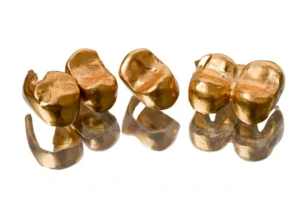
If you’re selling an old gold crown or other precious-metal dental scrap, keep in mind that it may also contain additional valuable metals like silver, platinum, and palladium. Many online gold buyers accept dental scrap, and dental offices are often approached by cash buyers offering quick, on-the-spot payments. But because these buyers aren’t professional refiners, they’re primarily focused on the gold content and typically don’t account for other precious metals in the mix.
Because of this, working with a refinery makes more sense. A professional refinery analyzes the full composition of your scrap and ensures you’re compensated for all the precious metals present, helping you get the most accurate evaluation and highest possible return.
Selling Gold Online
Selling gold online has become increasingly popular. After all, it’s convenient – just click a few buttons, send in your material and get paid. But here’s the catch: many online gold buyers are just scrap aggregators acting as intermediaries, and they’ll ultimately sell your scrap to a refinery.
When comparing different sites, look for signs that the company is actually refining the metal on-site. An authentic refinery will provide information about their process, photos and footage of their melters in action, and plenty of verified customer reviews. Working with a refinery like Garfield offers the best of both worlds: an easy transaction and a fair payout.
Garfield Refining: Trusted for Over a Century
Congrats, you’re now an informed scrap seller! Whether you have a single gold crown, a collection of jewelry or something in between, Garfield Refining can help you get the most for your precious metals.
With over 130 years of refining expertise, we serve jewelers, pawnbrokers, dentists, individual sellers and more. Our exceptional service has named us ‘Best Refiner’ by Dentaltown Magazine for 15 years running.
Ready to sell your gold scrap? Get started today with a free shipping label!
Written by
Allie BowmanAllie Bowman is the Content Lead at Garfield Refining, where she translates more than 130 years of precious metals expertise into clear, accurate, and practical content for individual sellers, dental professionals, jewelers, and collectors. A Dean's List graduate of the University of Delaware's Media Communication program, Allie has built her career around making complex subjects accessible to a broad audience. Her experience spans nutrition science, lifestyle magazine publishing, and precious metals refining, giving her a unique ability to transform technical information into engaging, trustworthy content. At Garfield, Allie brings editorial rigor and subject-matter expertise to every piece she produces. She works closely with Garfield's refining specialists and senior leadership to ensure that technical topics - from karat markings and assay methods to precious metals markets and spot price mechanics - are explained with both accuracy and clarity. Since joining Garfield's marketing team, Allie has written extensively on precious metals refining, dental scrap recovery, gold and silver bullion, estate and inherited jewelry, and industry-specific topics for dental and jewelry professionals. All content is reviewed by Garfield's leadership team prior to publication, ensuring it reflects the company's standards for accuracy, transparency, and industry expertise.
Reviewed by
Morgan KerrisseyMorgan Kerrissey is the President of Garfield Refining, one of North America's most longstanding and trusted precious metals refineries. For over two decades, Morgan has built his career at the intersection of commodities markets, metallurgy, and precious metals — earning a reputation as one of the most knowledgeable voices in the refining industry. Morgan joined Garfield in 2008, bringing rigorous operational discipline to a company built on exacting standards since 1892. Named President in 2014, he has guided Garfield through volatile gold, silver, and palladium markets, while modernizing its workforce and technologies and diversifying its metal supply chains. Under his leadership, Garfield has expanded its refining capabilities across the full lifecycle of precious metals recovery, entered new markets, and expanded services while maintaining the same customer forward approach that has made Garfield a mainstay for more than a century. From hedging strategy to daily refinery operations, Morgan commands high levels of technical depth and market fluency. Morgan grew up outside Boston, graduated from Harvard University, and has lived with his family in Philadelphia, PA for almost 20 years.