
We’re precious metal experts here at Garfield Refining, working with gold every day. And after more than a century in business, we couldn’t help but wonder how the beloved element got its name. Where did the word “gold” come from?
Gold’s chemical symbol on the Periodic Table, Au, comes from the Latin word aurum, meaning “shining dawn.” Aurum is linked to aurora, the Roman goddess of the dawn. While the Romans weren’t the first to discover gold, they did pioneer some advanced mining techniques to extract it.
The term “gold” has Old English and Germanic origins. The German Gothic language expressed gold as “gulþa” which later evolved into “geolu” in Old English. Then in the twelfth century, Middle English brought the modern word “gold” into existence.
Gold’s Earliest Uses
Historians generally agree that gold is one of the first metals to be discovered and used by humans. Archaeological evidence shows small amounts of natural gold in Spanish caves dating back to around 40,000 B.C.E.
Gold has historically been associated with the sun because of its radiant yellowish hue. Many ancient civilizations cherished gold as a symbol of purity, wealth and power. The metal was often used in religious rituals, sacred objects, and symbols of status and authority.
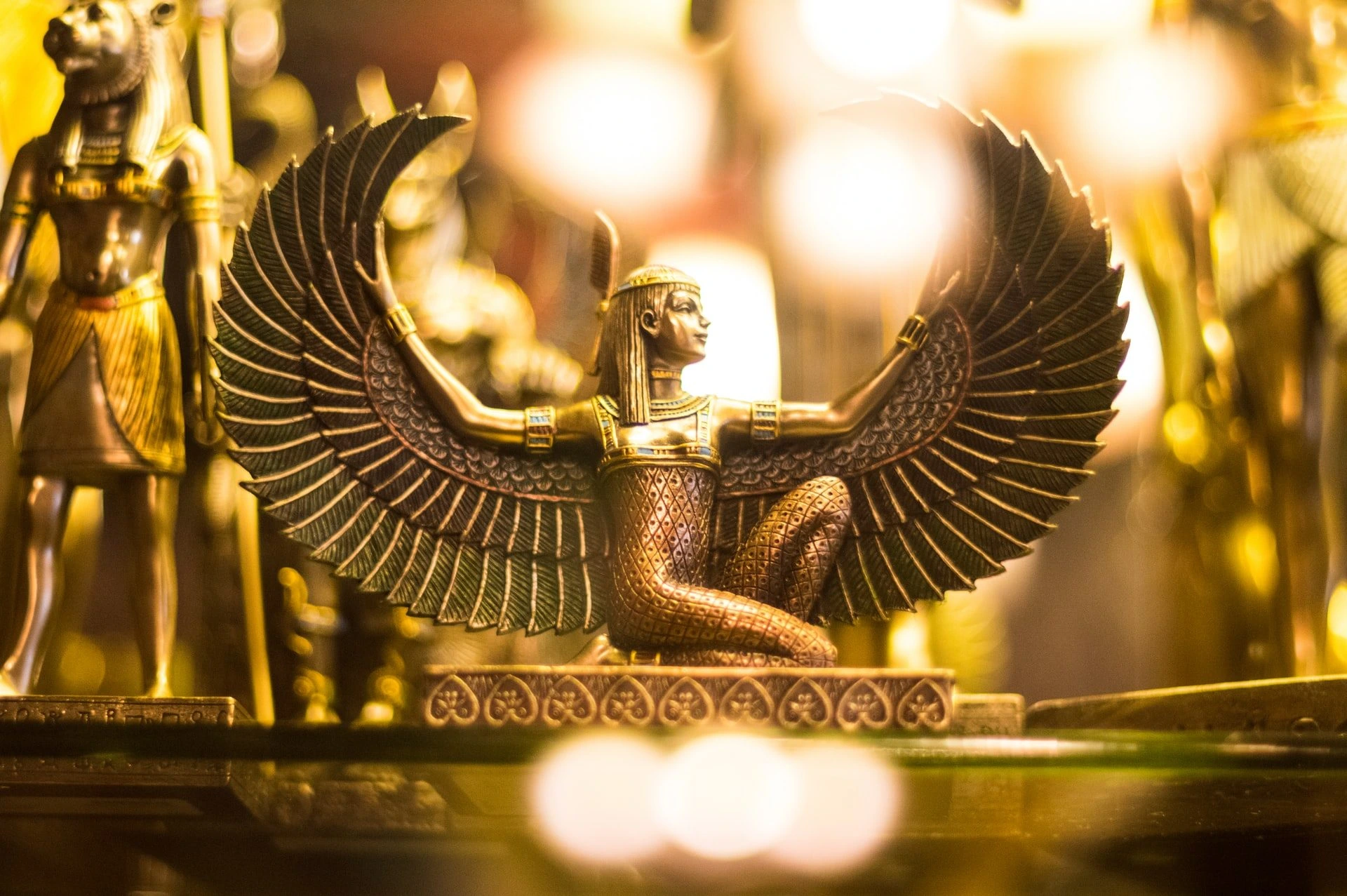
Ancient Egypt is one of the most famous examples of early gold usage. Gifted with a terrain rich in gold deposits, the Egyptians held the metal at a sacred status, linking it to eternal life and divine power. It adorned royal tombs and burial masks and was often buried with the deceased as a way to protect them in the afterlife.
Gold held similar spiritual significance in South America. The Incas crafted intricate religious objects like masks and sun discs, while in ancient Colombia, powdered gold was used in coronation ceremonies, covering the body of a future king.

Gold and the Sun Gods
An interesting common thread across cultures is gold’s connection to solar deities. The metal’s brilliance made it a natural symbol of the sun.
The ancient Egyptians associated gold with Ra, their sun god, sometimes referring to it as the “flesh of the gods.” The Incas believed gold was the “sweat” of Inti, their sun deity, while the Aztecs linked it to Huitzilopochtli, the god of sun and war.
Gold’s Ceremonial Role Today
Thousands of years later, gold still plays a prominent role in cultural and ceremonial traditions around the world. From Chinese New Year celebrations to Indian weddings, the metal remains a symbol of prosperity and good fortune.
Beyond religious practices, gold is also used to symbolize achievement in awards like Olympic medals, Oscars, Golden Globes and more. These famous medals and statuettes are plated with real gold to signify honor and prestige.
And last but not least, gold jewelry continues to carry deep personal meaning, often marking major life milestones like weddings and anniversaries.
Gold’s Timeless Value
Given gold’s rarity, intrinsic value, cultural significance and versatility, we’re willing to bet that the metal will continue to captivate humans for centuries to come.
If you’re thinking about selling unwanted gold, Garfield Refining is here to help. Since 1892, we’ve combined industry expertise with award-winning service to help our clients get the most from their precious metal scrap.
Looking to sell unwanted gold, silver, platinum or palladium? Send us your metal today with a free, fully-insured shipping label!
Written by
Allie BowmanAllie Bowman is the Content Lead at Garfield Refining, where she translates more than 130 years of precious metals expertise into clear, accurate, and practical content for individual sellers, dental professionals, jewelers, and collectors. A Dean's List graduate of the University of Delaware's Media Communication program, Allie has built her career around making complex subjects accessible to a broad audience. Her experience spans nutrition science, lifestyle magazine publishing, and precious metals refining, giving her a unique ability to transform technical information into engaging, trustworthy content. At Garfield, Allie brings editorial rigor and subject-matter expertise to every piece she produces. She works closely with Garfield's refining specialists and senior leadership to ensure that technical topics - from karat markings and assay methods to precious metals markets and spot price mechanics - are explained with both accuracy and clarity. Since joining Garfield's marketing team, Allie has written extensively on precious metals refining, dental scrap recovery, gold and silver bullion, estate and inherited jewelry, and industry-specific topics for dental and jewelry professionals. All content is reviewed by Garfield's leadership team prior to publication, ensuring it reflects the company's standards for accuracy, transparency, and industry expertise.
Reviewed by
Morgan KerrisseyMorgan Kerrissey is the President of Garfield Refining, one of North America's most longstanding and trusted precious metals refineries. For over two decades, Morgan has built his career at the intersection of commodities markets, metallurgy, and precious metals — earning a reputation as one of the most knowledgeable voices in the refining industry. Morgan joined Garfield in 2008, bringing rigorous operational discipline to a company built on exacting standards since 1892. Named President in 2014, he has guided Garfield through volatile gold, silver, and palladium markets, while modernizing its workforce and technologies and diversifying its metal supply chains. Under his leadership, Garfield has expanded its refining capabilities across the full lifecycle of precious metals recovery, entered new markets, and expanded services while maintaining the same customer forward approach that has made Garfield a mainstay for more than a century. From hedging strategy to daily refinery operations, Morgan commands high levels of technical depth and market fluency. Morgan grew up outside Boston, graduated from Harvard University, and has lived with his family in Philadelphia, PA for almost 20 years.