
 |
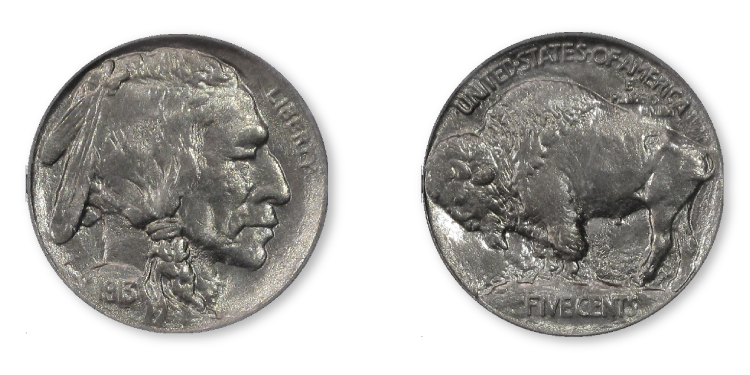
In 1913, the Mint introduced the Indian Head nickel into the flow of United States currency. Also known as the Buffalo Nickel, the five-cent piece was a key ingredient in the early 20th Century’s overhaul of American coinage.
. |
Early Incarnation & The Coin’s Mysterious Man
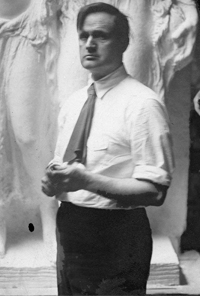
The then-newly-designed nickel featured obverse and reverse images by noted American sculptor James Earle Fraser. The former depicts a proud Native American countenance, while the latter features an American bison, both emblematic of the American West from the 1870s-1880s.
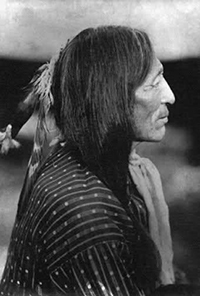
Legend has it that a trio of individuals sat for Fraser, and the iconic profile is a composite of the three. Two were confirmed to be Chief Iron Tail and Chief Two Moons, Lakota Sioux, and Cheyenne respectively, while the identity of the third subject has been lost to history.
Fraser’s talents were obvious at the time he was selected as the Indian Head nickel’s designer, as he had been an assistant for renowned sculptor Augustus Saint-Gaudens, himself an artistic master behind notable coinage. Saint-Gaudens is credited with designing both the $10 and $20 eagle and double eagle coins from 1907.
 |
Subtle Differences in Design
The popularity of the Indian Head nickel is unquestioned … during the coin’s 25-year minting, more than 1.2 billion Indian Heads were struck. Knowledgeable coin collectors will note that two subtle nuances were to be found on first-year 1913-minted coins: the bison standing on a mound base, or a thinner straight-line base. Replaced by the Jefferson nickel in 1938, the Indian Head saw new life six decades later in 2001 when the United States Mint revisited Fraser’s design, and the American Buffalo Commemorative Coin was released.
The Road to Production Paved in Gold
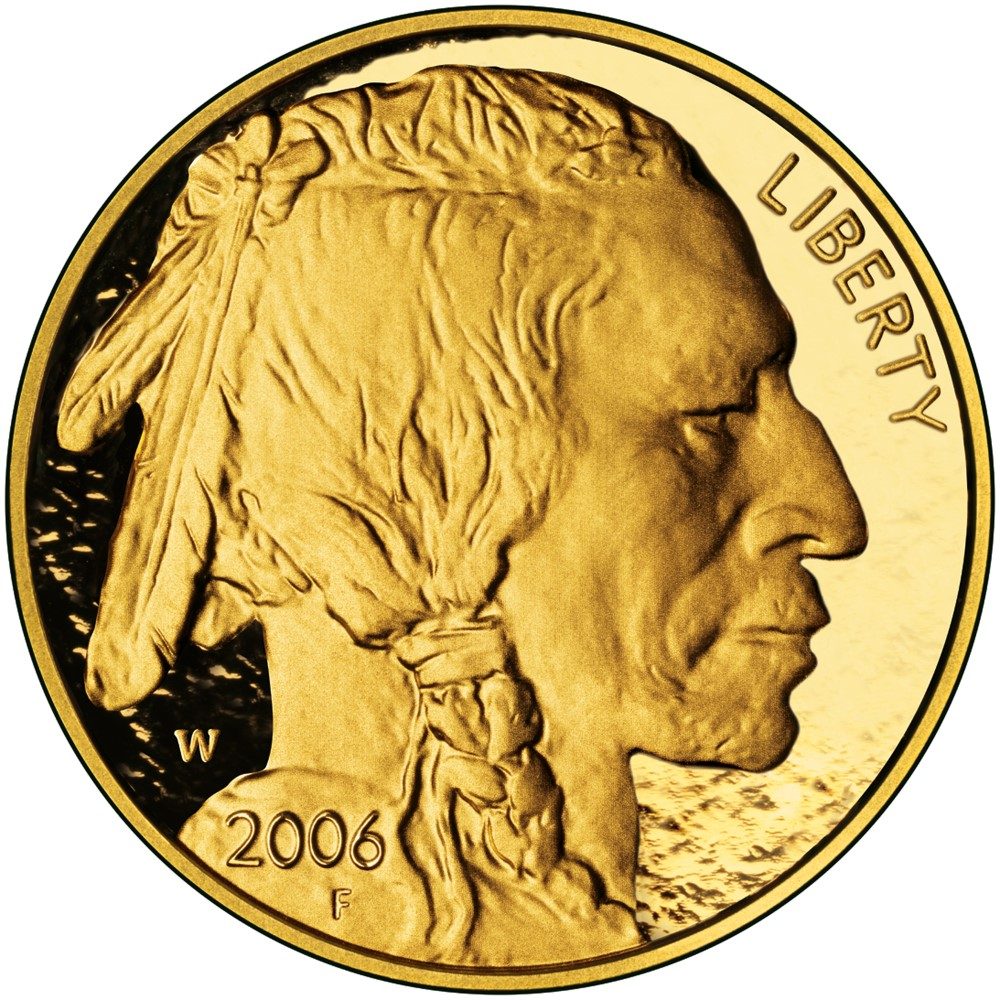
The understated magnificence of Fraser’s masterpiece was renewed once again in December 2005, as production of the 24-karat American Buffalo Gold Coin was authorized by Public Law 109-145, also known as the Presidential $1 Coin Act.
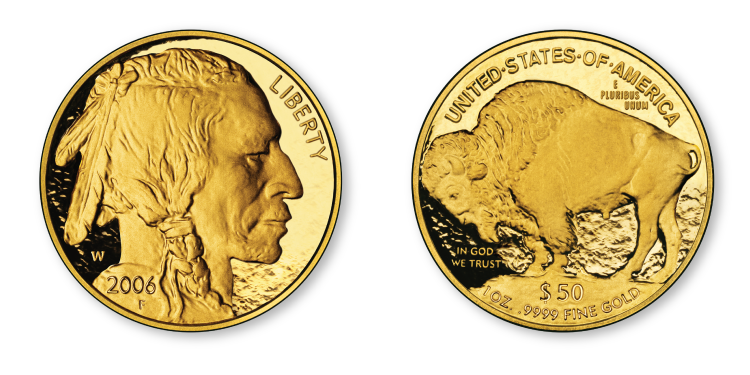 |
The American Buffalo gold coin is legal tender, with a face value of $50. However, it currently sells for around $1,500 — give or take a few hundred.
These American Buffalo Gold Coins are the first .9999 24-karat gold coins ever struck by the United States Mint. Their value draws precious metals collectors and numismatists with equal vigor. As the American Buffalo Gold Coins are legal tender, each is guaranteed by the U.S. Government as to metallic content and purity, and can be purchased directly through the United States Mint.
It’s not surprising why the Mint chose James Earle Fraser to redesign this piece at the turn of the century. One can’t help but awe at the number of architectural pieces and public monuments Fraser has to his credit. How ironic then that standing tall amongst sculpted American presidents and historic luminaries is a modest five-cent piece, adorned front and back by an American Indian and bison: Fraser’s Buffalo nickel, as timeless a design as any that has graced United States currency, and the model for today’s American Buffalo Gold Coin.
Interested in adding a valuable piece of U.S. history to your collection? Check out the Gold Buffalo and other forms of bullion Garfield Refining offers.
Written by
Allie BowmanAllie Bowman is the Content Lead at Garfield Refining, where she translates more than 130 years of precious metals expertise into clear, accurate, and practical content for individual sellers, dental professionals, jewelers, and collectors. A Dean's List graduate of the University of Delaware's Media Communication program, Allie has built her career around making complex subjects accessible to a broad audience. Her experience spans nutrition science, lifestyle magazine publishing, and precious metals refining, giving her a unique ability to transform technical information into engaging, trustworthy content. At Garfield, Allie brings editorial rigor and subject-matter expertise to every piece she produces. She works closely with Garfield's refining specialists and senior leadership to ensure that technical topics - from karat markings and assay methods to precious metals markets and spot price mechanics - are explained with both accuracy and clarity. Since joining Garfield's marketing team, Allie has written extensively on precious metals refining, dental scrap recovery, gold and silver bullion, estate and inherited jewelry, and industry-specific topics for dental and jewelry professionals. All content is reviewed by Garfield's leadership team prior to publication, ensuring it reflects the company's standards for accuracy, transparency, and industry expertise.
Reviewed by
Morgan KerrisseyMorgan Kerrissey is the President of Garfield Refining, one of North America's most longstanding and trusted precious metals refineries. For over two decades, Morgan has built his career at the intersection of commodities markets, metallurgy, and precious metals — earning a reputation as one of the most knowledgeable voices in the refining industry. Morgan joined Garfield in 2008, bringing rigorous operational discipline to a company built on exacting standards since 1892. Named President in 2014, he has guided Garfield through volatile gold, silver, and palladium markets, while modernizing its workforce and technologies and diversifying its metal supply chains. Under his leadership, Garfield has expanded its refining capabilities across the full lifecycle of precious metals recovery, entered new markets, and expanded services while maintaining the same customer forward approach that has made Garfield a mainstay for more than a century. From hedging strategy to daily refinery operations, Morgan commands high levels of technical depth and market fluency. Morgan grew up outside Boston, graduated from Harvard University, and has lived with his family in Philadelphia, PA for almost 20 years.