
Last Updated: September 16, 2026
The 2026 Olympic Winter Games are right around the corner – and while we always enjoying watching the competition, what we’re really interested in is the medals. (Precious-metal geeks… guilty.)
If you’ve ever wondered whether the gold medals are made of real gold, or just how pure that gold might be, you’ve come to the right place.
What are Gold Medals Made Of?
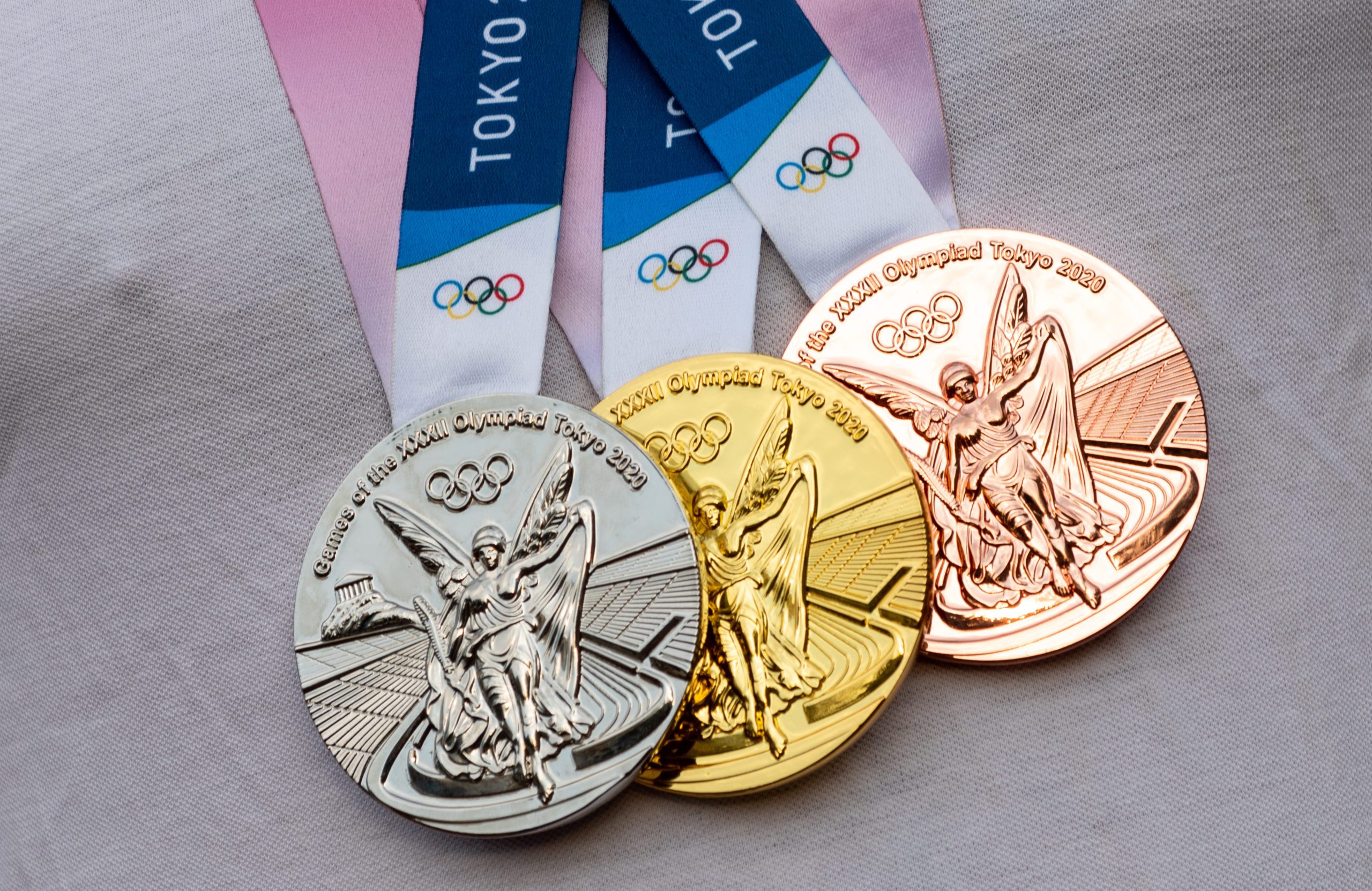
Olympic gold medals are not 100% gold – they’re primarily made of silver, with a thin layer of gold plating on the surface.
Each time the Olympic Games take place, the host city’s organizing committee gets to decide on the design and composition of the gold, silver, and bronze medals. The National Olympic Committee gives a lot of creative leeway with the medal designs, but there are still a few basic requirements.
The rules for gold medals are:
- – Gold (and silver) medals must be at least 92.5% silver (sterling silver).
- – Each gold medal is plated with about 6 grams of pure gold.
- – All medals must be at least 3 mm thick and 60 mm in diameter.
A Brief History of Olympic Medals
In the ancient Greek Olympics, the champions didn’t get medals at all. Winners received a wreath of olive leaves from a tree near the temple of Zeus – a symbol of honor rather than material wealth.
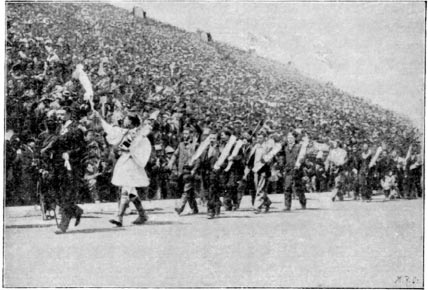
When Athens hosted the first modern Olympic Games in 1896 (four years after Garfield Refining was founded!), first-place winners actually received silver medals, since silver was considered more valuable than gold at the time. At the 1900 Paris Games, the winners were trophies or cups instead of medals altogether.
Precious metals didn’t enter the picture until the 1904 Summer Olympic Games in St. Louis. This is when the gold, silver and bronze medal tradition began! For a short period, first-place metals were made of solid gold, a practice that lasted through the 1912 Stockholm Games.
After that, the composition changed to silver medals with gold plating. According to ABC News, World War I caused precious metal shortages, which likely contributed to the shift. Olympic gold medals haven’t been solid gold for more than a century.
Sentimental Value vs. Metal Value
Ultimately, the true value of an Olympic medal is sentimental. It represents years—often decades—of dedication, sacrifice, teamwork, and perseverance.
Most athletes wouldn’t dream of scrapping their medals – but some have sold them over the years, whether due to needing the cash or to raise money for charitable causes. When sold at auction, Olympic medals can bring in some serious cash.
Mark Wells, for example, won a gold medal with the U.S. Men’s Hockey team at the Winter Olympics in 1980. He sold his medal to a private collector for nearly $311,000 in 2010. And in 2013, one of Jesse Owen’s gold medals from the 1936 Summer Games in Berlin sold for about $1.47 million!
Precious Metal Value: How Much Are Olympic Medals Worth?
The 2026 Milano Cortina medals will likely carry decent precious-metal value, especially given today’s record-high gold and silver prices.
With approximately 6 grams of pure gold, each gold medal contains at least $850 worth of gold alone. That doesn’t even account for the silver content – the sterling silver adds additional value, especially with silver trading at historic highs ($68/oz at the time of writing).
For more medal value context:
- – Gold medals from the 2024 Paris Summer Games were valued at roughly $755 at the time, based on metal content. Those medals also included recycled iron from the Eiffel Tower, a unique and symbolic touch.
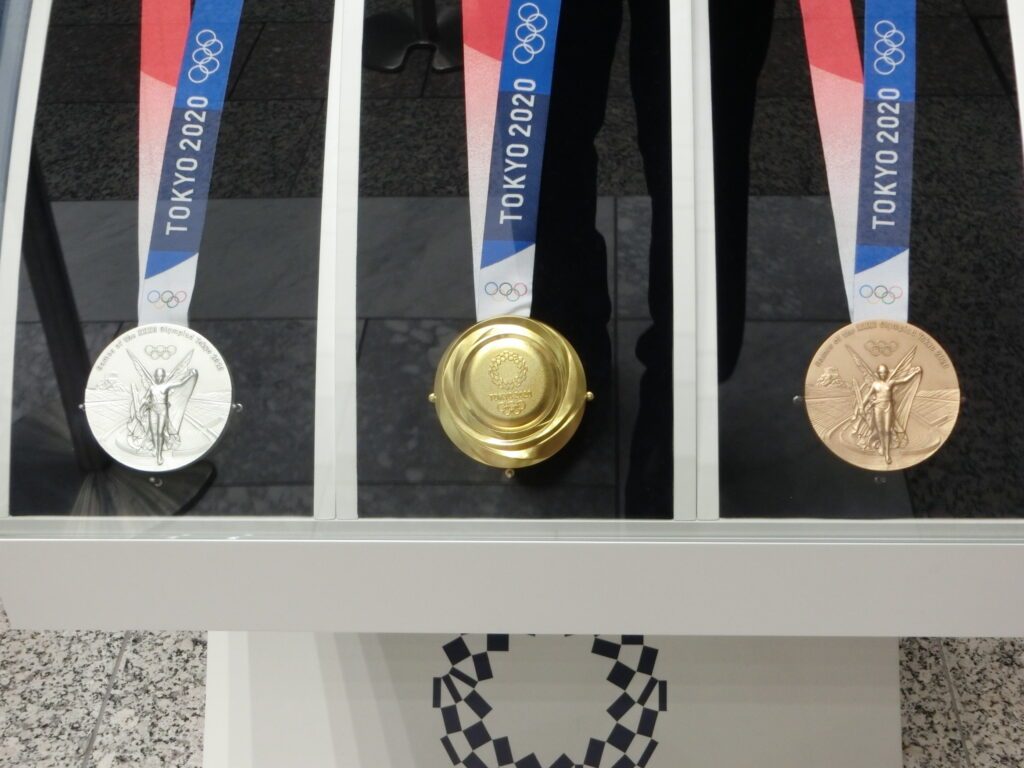
- – At the 2020 Tokyo Olympics, gold medals – which, interestingly, were made using recycled electronics donated by Japanese citizens – were worth about $800 in combined gold and silver value at the time.
At the 2020 Tokyo Games, the gold medals (which were also mainly silver with a roughly-6-gram gold plating) were worth about $800 in gold and silver. A lot of the precious metals came from recycled electronics donated by Japanese citizens, which is both interesting and sustainable.
All in all, Olympic gold medals don’t contain enough gold to be worth a fortune on melt value alone, but their value is still significant. The only medals with a truly low value are the bronze ones, which are an alloy of copper and zinc. Those have a melt value of less than $10!
Thinking About Selling Gold or Silver?
If you’re looking to sell any unwanted gold or silver, Garfield Refining can help you cash in with confidence. Established in 1892, we bring more than a century of expertise in precious metals refining – delivering competitive payouts and industry-leading customer service.
Ready to refine your precious metal scrap? Download a free shipping label today!
Written by
Allie BowmanAllie Bowman is the Content Lead at Garfield Refining, where she translates 134 years of precious metals expertise into clear, accurate, and practical content for individual sellers, dental professionals, jewelers, and collectors. A Dean's List graduate of the University of Delaware's Media Communication program, Allie has built her career around making complex subjects accessible to a broad audience. Her experience spans nutrition science, lifestyle magazine publishing, and precious metals refining, giving her a unique ability to transform technical information into engaging, trustworthy content. At Garfield, Allie brings editorial rigor and subject-matter expertise to every piece she produces. She works closely with Garfield's refining specialists and senior leadership to ensure that technical topics - from karat markings and assay methods to precious metals markets and spot price mechanics - are explained with both accuracy and clarity. Since joining Garfield's marketing team, Allie has written extensively on precious metals refining, dental scrap recovery, gold and silver bullion, estate and inherited jewelry, and industry-specific topics for dental and jewelry professionals. All content is reviewed by Garfield's leadership team prior to publication, ensuring it reflects the company's standards for accuracy, transparency, and industry expertise.
Reviewed by
Morgan KerrisseyMorgan Kerrissey is the President of Garfield Refining, one of North America's most longstanding and trusted precious metals refineries. For over two decades, Morgan has built his career at the intersection of commodities markets, metallurgy, and precious metals — earning a reputation as one of the most knowledgeable voices in the refining industry. Morgan joined Garfield in 2008, bringing rigorous operational discipline to a company built on exacting standards since 1892. Named President in 2014, he has guided Garfield through volatile gold, silver, and palladium markets, while modernizing its workforce and technologies and diversifying its metal supply chains. Under his leadership, Garfield has expanded its refining capabilities across the full lifecycle of precious metals recovery, entered new markets, and expanded services while maintaining the same customer forward approach that has made Garfield a mainstay for more than a century. From hedging strategy to daily refinery operations, Morgan commands high levels of technical depth and market fluency. Morgan grew up outside Boston, graduated from Harvard University, and has lived with his family in Philadelphia, PA for almost 20 years.