
Last Updated: September 15, 2026
Have you ever heard of tumbaga? This intriguing precious metal alloy played a unique role in the Age of Exploration, and continues making a splash today in modern science. The term “tumbaga” is Spanish, referring to a gold-copper alloy widely used in pre-Columbian Mesoamerica and South America. It was coined by Spanish conquistadors who discovered heaps of the metal on their quest to find riches throughout the Americas in the 16th century.
Ancient Alloys
“Tumbaga” likely originates from the Malay word tembaga, meaning copper or brass. The alloy is comprised of gold and copper, sometimes with silver mixed in too. The proportions of each metal vary significantly with different objects and uses. Tumbaga is valued because it is harder than pure copper yet malleable like gold, making it ideal for crafting.
While some gold alloys occur often in nature, such as the gold-silver alloy known as electrum, native gold-copper is less common. This is why tumbaga primarily refers to a human-made alloy. Modern gold-copper alloys still show up in jewelry today, and a jewelry refiner can identify exactly what is in a piece before making an offer.
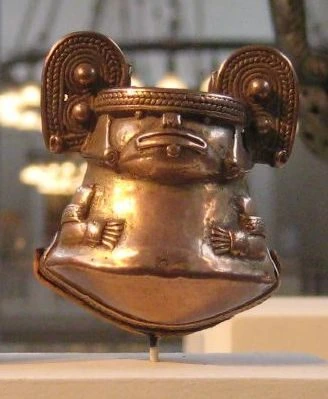
Ancient cultures in Central and South America used tumbaga to craft decorative pieces, religious objects, musical instruments, jewelry and more. Its relatively low melting point made it easier to work with than pure gold or copper.
A Surprising Discovery
The conquistadors who encountered tumbaga were searching for pure gold, not gold-copper alloys. One particularly misleading discovery took place in Panama around 1519 AD. A fleet of conquistadors had promised the Spanish court a mass of gold in exchange for investing in their dangerous transatlantic voyage. The explorers had expected the region to be rich in gold mines – but to their disappointment, the mines eluded them. They sadly resorted to looting gold items from the indigenous people, some even robbing grave goods from cemeteries.
Once the Spaniards began to melt down their hoard, they realized that barely any of it was made of pure gold. It was actually tumbaga! Many of the items contained large amounts of copper, some with as little as 20% gold.
One would think that an alloy with so much copper would have a reddish tint, giving the looters a clue about its composition – but on the outside, the objects looked very much like pure gold. It was later discovered that this effect was achieved through a process called depletion gilding.
Ancient Techniques: Depletion Gilding
Depletion gilding is a fascinating process that historians believe was developed among the cultures of ancient Peru as early as 400 BC. It was likely used throughout Mesoamerica at least a millennium before the conquistadors arrived. The technique involved treating a tumbaga alloy with a simple acid (like citric acid), essentially dissolving the copper from the surface, leaving behind a paper-thin outer layer of pure gold.
Tumbaga Today
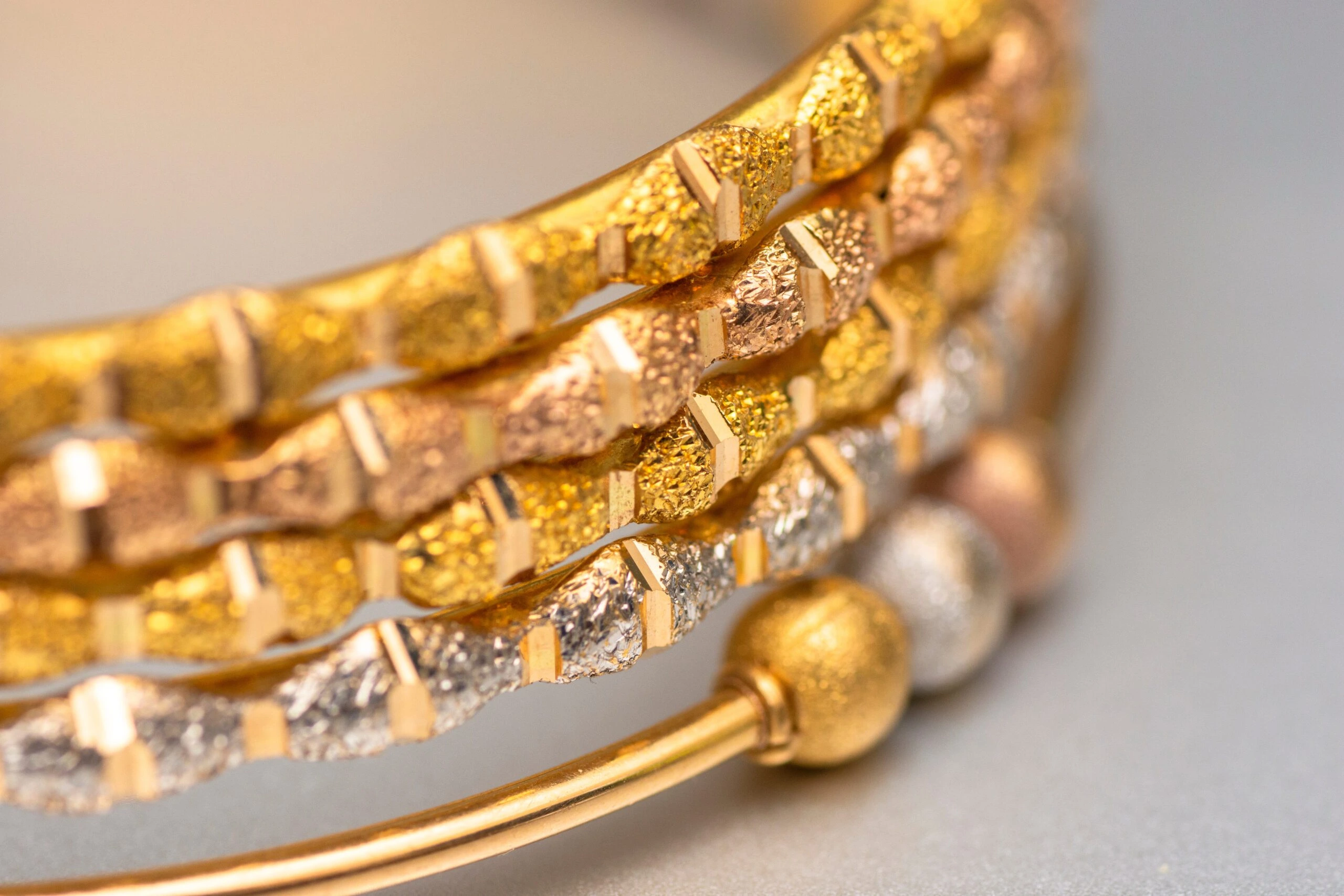
Gold-copper alloys have been used by artisans for centuries and are still popular today, especially in jewelry-making. Rose gold, for example, is technically a modern-day form of tumbaga – it’s a gold-copper alloy that’s valued for its unique color and durability.
Beyond that, Au–Cu alloys have gained prominence in nanoscience, mostly for catalysis – they catalyze a wide range of chemical reactions from carbon monoxide oxidationto selective oxidation of alcohols. Gold nanoparticles also show exciting promise in medicine, including cancer treatments and diagnostic testing.
The “Tumbaga” Shipwreck
Throughout history, many shipwrecks have revealed treasures of precious metals, gemstones, and artifacts. In 1992 about 200 silver bars were recovered from a shipwreck near Grand Bahama Island. These bars weren’t pure silver, but rather a mixture of silver, copper, and gold: tumbaga.
The conquistadors had melted these metals into tumbaga bars during Hernán Cortés’ conquests, making them easier to transport across the Atlantic. Once back in Spain, the bars were typically melted again to separate and purify the metals. This process – refining – is exactly what we specialize in here at Garfield Refining.
Precious Metal Alloys
Tumbaga’s rich history continues to influence modern science and craftsmanship. Even alloys high in copper could potentially hold significant value if they contain enough gold – especially with today’s record-breaking prices, which recently surpassed $3,600 per troy ounce!
If you have unwanted rose gold jewelry, 14k jewelry, or other gold items that you’re looking to monetize, a trusted refinery like Garfield can help you maximize their value. We specialize in refining precious metals like gold, silver, platinum and palladium, providing industry-leading payouts and award-winning customer service. If you have precious metal items that you think may be worth refining, reach out today to discuss your options!
If you enjoyed this post, check out other articles like ‘Unexpected Uses of Precious Metals’ or ‘How is Gold Used in Space Exploration?’
Ready to refine your precious metal scrap? Give us a call at 800-523-0968 or head directly to our shipping form to download a prepaid label!
Written by
Allie BowmanAllie Bowman is the Content Lead at Garfield Refining, where she translates more than 130 years of precious metals expertise into clear, accurate, and practical content for individual sellers, dental professionals, jewelers, and collectors. A Dean's List graduate of the University of Delaware's Media Communication program, Allie has built her career around making complex subjects accessible to a broad audience. Her experience spans nutrition science, lifestyle magazine publishing, and precious metals refining, giving her a unique ability to transform technical information into engaging, trustworthy content. At Garfield, Allie brings editorial rigor and subject-matter expertise to every piece she produces. She works closely with Garfield's refining specialists and senior leadership to ensure that technical topics - from karat markings and assay methods to precious metals markets and spot price mechanics - are explained with both accuracy and clarity. Since joining Garfield's marketing team, Allie has written extensively on precious metals refining, dental scrap recovery, gold and silver bullion, estate and inherited jewelry, and industry-specific topics for dental and jewelry professionals. All content is reviewed by Garfield's leadership team prior to publication, ensuring it reflects the company's standards for accuracy, transparency, and industry expertise.
Reviewed by
Morgan KerrisseyMorgan Kerrissey is the President of Garfield Refining, one of North America's most longstanding and trusted precious metals refineries. For over two decades, Morgan has built his career at the intersection of commodities markets, metallurgy, and precious metals — earning a reputation as one of the most knowledgeable voices in the refining industry. Morgan joined Garfield in 2008, bringing rigorous operational discipline to a company built on exacting standards since 1892. Named President in 2014, he has guided Garfield through volatile gold, silver, and palladium markets, while modernizing its workforce and technologies and diversifying its metal supply chains. Under his leadership, Garfield has expanded its refining capabilities across the full lifecycle of precious metals recovery, entered new markets, and expanded services while maintaining the same customer forward approach that has made Garfield a mainstay for more than a century. From hedging strategy to daily refinery operations, Morgan commands high levels of technical depth and market fluency. Morgan grew up outside Boston, graduated from Harvard University, and has lived with his family in Philadelphia, PA for almost 20 years.