

At Garfield Refining, we recycle extracted dental restorations like gold crowns, bridges, PFMs, inlays/onlays and more. And when you spend enough time processing dental scrap, your mind can’t help but wander. Next thing you know, you’re reflecting on life cycle of a gold crown. The same gold that spent years in a patient’s mouth may have once been part of a rare coin – and could one day live on as a wedding band. Every ounce of gold that gets refined is part of a fascinating cycle, giving precious metals new life again and again!
Are Gold Crowns Still Around?
Although gold crowns aren’t nearly as popular as they used to be, they’re still preferred at times for their strength, biocompatibility and longevity. Gold crowns were considered the gold standard in dentistry for decades. They became widely used starting in the 1930s, remaining popular until the late 80s/early 90s. Over time, people began opting for more natural-looking, tooth-colored materials like ceramic.
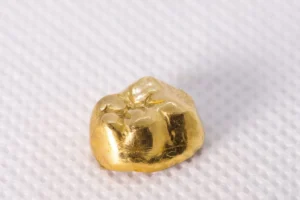
Gold crowns are still used today for certain patients and clinical scenarios. For example, gold may be ideal for patients who grind or clench their teeth and need a durable material. After all, gold crowns have been proven to last up to 20+ years. They also make sense for back molars where chewing forces are higher. All in all, gold has a rich history in dentistry and will likely remain a trusted material for years to come.
Do Older Crowns Have More Gold?
There’s no such thing as a completely pure gold crown – all gold-containing dental crowns are actually gold alloys (combinations of gold and other metals). This is because pure gold is too soft and malleable to withstand daily chewing and biting. A solid 24k crown would get bent out of shape within just a few hours. That’s why other metals are added to increase strength and durability.
While no gold crown is pure, the older ones – typically pre-1980s – often contain higher amounts of gold and/or other precious metals. High-noble alloys (made from a minimum of 60% precious metals, with gold as the main component) were the norm from roughly the 1930s-80s due to their unparalleled durability and biocompatibility. But when gold prices went up, dentists began looking for cheaper alternatives, which led them to opt for alloys with lower gold content.
Who Makes Gold Crowns?
In the early days of restorative dentistry (late 1800s-early 1900s), dentists often created gold crowns themselves. As casting techniques advanced, specialized dental laboratories emerged, and by the 1950s, labs had become the standard. This marks phase 1 of a dental crown’s life cycle: creation in a lab. Dental lab techs use special tools to make molds of a patient’s teeth impression and create gold crowns in precise shapes and sizes. The technicians will typically purchase gold alloys in the form of casting grain, aka small granules, and cast them into crowns.
Gold Crowns in Their Prime: The Glory Days
Every gold crown is custom-made to fit perfectly over a patient’s tooth. Once placed, it’ll typically serve 15-30 years, faithfully protecting the tooth beneath. Eventually, like all restorations, the crown may need to be replaced, leading into the next phase of its life cycle.
Once extracted, a crown is often sent to a precious metals refinery like Garfield for recycling. Dentists usually offer to return extracted crowns to their patients. When a patient chooses not to keep their crown, the dentist will likely set it aside with the rest of their scrap. Many dentists who perform extractions collect precious metal scrap and refine it at regular intervals. Not only is refining an eco-friendly practice, but it’s a great way to earn some extra cash – especially with today’s soaring gold prices!
The Next Step: Refining
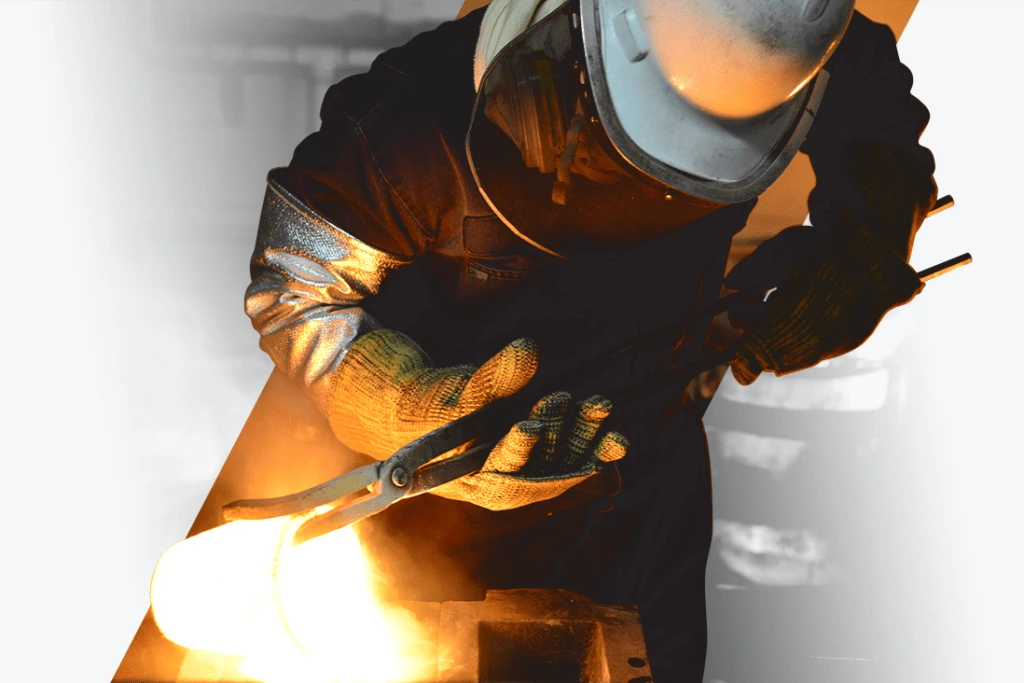
Once a gold crown retires and gets sent to a refinery, it’s then melted down and purified. All of the gold and other precious metals are extracted from the alloy, leaving behind the base metals and any organic material. The gold is then cast into bars, ready to re-enter the metals market.
Life After Refining
Refining marks the end of one life and the beginning of another. A dental crown may no longer exist in its original form, but the gold within it retains its full value and integrity as a chemical element. Once refined, that gold can be repurposed into bullion coins and bars, fine jewelry, electronic components—or even new dental restorations.
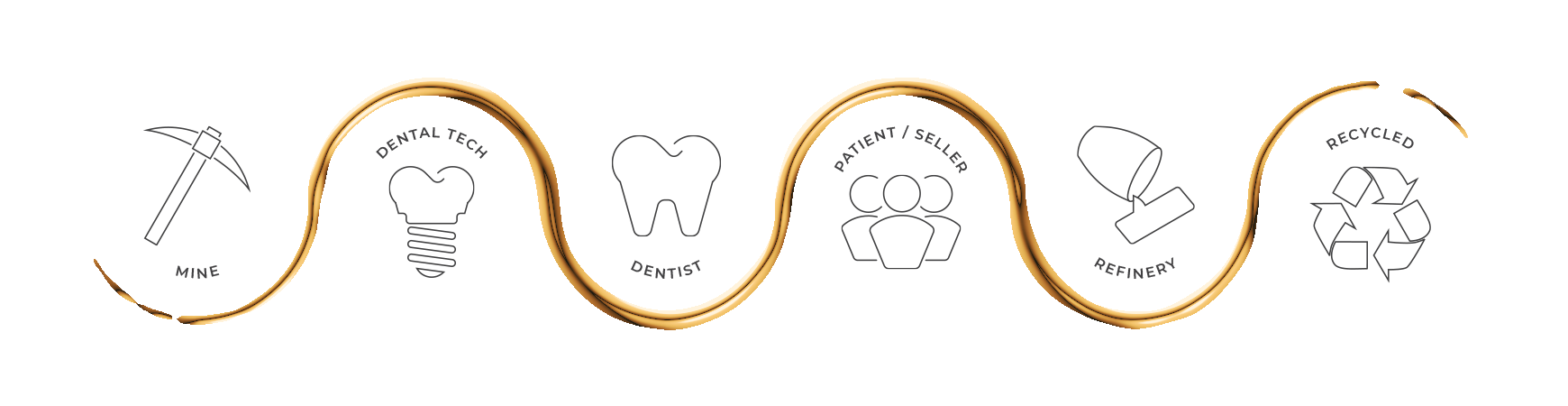
What makes gold so remarkable is its ability to be infinitely recycled without ever losing quality. And while most people think of gold for coins and jewelry, the metal has many unexpected uses in fields like glassmaking, space exploration, medical technology and more!
Refining Dental Scrap for Cash
If you or a loved one have a retired dental crown, Garfield Refining can help you obtain the highest possible payout. With over a century of refining expertise, we’ve mastered the art of maximizing recovery from every ounce of metal. And as a family-owned business, our commitment to transparency and exceptional customer service has earned us the title of ‘Best Scrap Refiner’ by Dentaltown Magazine for 14 years straight.
Ready to sell your precious metal scrap? Start today with a fully-insured, prepaid shipping label and turn your scrap into cash!
Written by
Allie BowmanAllie Bowman is the Content Lead at Garfield Refining, where she translates more than 130 years of precious metals expertise into clear, accurate, and practical content for individual sellers, dental professionals, jewelers, and collectors. A Dean's List graduate of the University of Delaware's Media Communication program, Allie has built her career around making complex subjects accessible to a broad audience. Her experience spans nutrition science, lifestyle magazine publishing, and precious metals refining, giving her a unique ability to transform technical information into engaging, trustworthy content. At Garfield, Allie brings editorial rigor and subject-matter expertise to every piece she produces. She works closely with Garfield's refining specialists and senior leadership to ensure that technical topics - from karat markings and assay methods to precious metals markets and spot price mechanics - are explained with both accuracy and clarity. Since joining Garfield's marketing team, Allie has written extensively on precious metals refining, dental scrap recovery, gold and silver bullion, estate and inherited jewelry, and industry-specific topics for dental and jewelry professionals. All content is reviewed by Garfield's leadership team prior to publication, ensuring it reflects the company's standards for accuracy, transparency, and industry expertise.
Reviewed by
Morgan KerrisseyMorgan Kerrissey is the President of Garfield Refining, one of North America's most longstanding and trusted precious metals refineries. For over two decades, Morgan has built his career at the intersection of commodities markets, metallurgy, and precious metals — earning a reputation as one of the most knowledgeable voices in the refining industry. Morgan joined Garfield in 2008, bringing rigorous operational discipline to a company built on exacting standards since 1892. Named President in 2014, he has guided Garfield through volatile gold, silver, and palladium markets, while modernizing its workforce and technologies and diversifying its metal supply chains. Under his leadership, Garfield has expanded its refining capabilities across the full lifecycle of precious metals recovery, entered new markets, and expanded services while maintaining the same customer forward approach that has made Garfield a mainstay for more than a century. From hedging strategy to daily refinery operations, Morgan commands high levels of technical depth and market fluency. Morgan grew up outside Boston, graduated from Harvard University, and has lived with his family in Philadelphia, PA for almost 20 years.