

Could gold help save the planet by generating value to fund nuclear fusion at a commercial scale, eliminating the need to use fossil fuels altogether? Some scientists would say this isn’t as far-fetched as it may sound. In fact, many believe that fusion power could become a reality within the next decade. The main obstacle right now is cost.
That’s where gold comes into play. The metal’s inherent value could help fund the development of fusion energy – potentially enough to propel the shift away from fossil fuels and make a significant impact on climate change. And one Silicon Valley startup, Marathon Fusion, already has an idea for how to achieve that.
Chrysopoeia and Modern Alchemy
For millennia, people have pursued alchemy with little success – from medieval alchemists seeking the Philosopher’s Stone to early-1900s physicists attempting to turn mercury into gold. This process, known as chrysopoeia – turning base metals into gold – has already been demonstrated at very small scales using particle accelerators and neutron capture, but never in an economically feasible way.
Over the past 50 years, scientists have technically created gold in laboratories, but only atom by atom and at staggering costs. Producing even a minuscule amount is wildly expensive. But Marathon Fusion hopes to change that one day.
The Vision: Gold As a Fusion Byproduct
Marathon’s mission is ambitious: to make both clean energy production and gold synthesis economically viable. Their concept is based on nuclear fusion: the process of smashing atomic particles together to release massive amounts of clean energy, often along with high-energy neutrons. Fusion is considered an almost-limitless, carbon-free power source that could one day replace fossil fuels, but it’s still way too expensive to scale commercially.
Marathon’s idea is to create a secondary revenue stream to offset at least a chunk of those costs. During the fusion process, large numbers of neutrons are produced. The company wants to repurpose those neutrons to transform mercury into gold. In theory, one entity could act as both a power plant and a gold factory, selling the gold to help subsidize the massive costs of fusion energy production.
Unfortunately, commercial fusion is still out of reach at the moment. Experimental fusion reactors that are capable of generating electricity do currently exist, but the technology is still far from being able to make a meaningful dent in the world’s energy demand. But maybe an added revenue stream from gold could help.
How Much Gold Could Be Produced?
You may be wondering: wouldn’t turning mercury into gold flood the market and crash gold prices? Theoretically, yes – but in practice, the output would be tiny compared to global mine production. Adam Rutkowski, one of Marathon Fusion’s co-founders, estimates that a single fusion reactor could produce only a couple of tons of gold per year. By comparison, more than 3,000 tons of gold are mined globally each year.
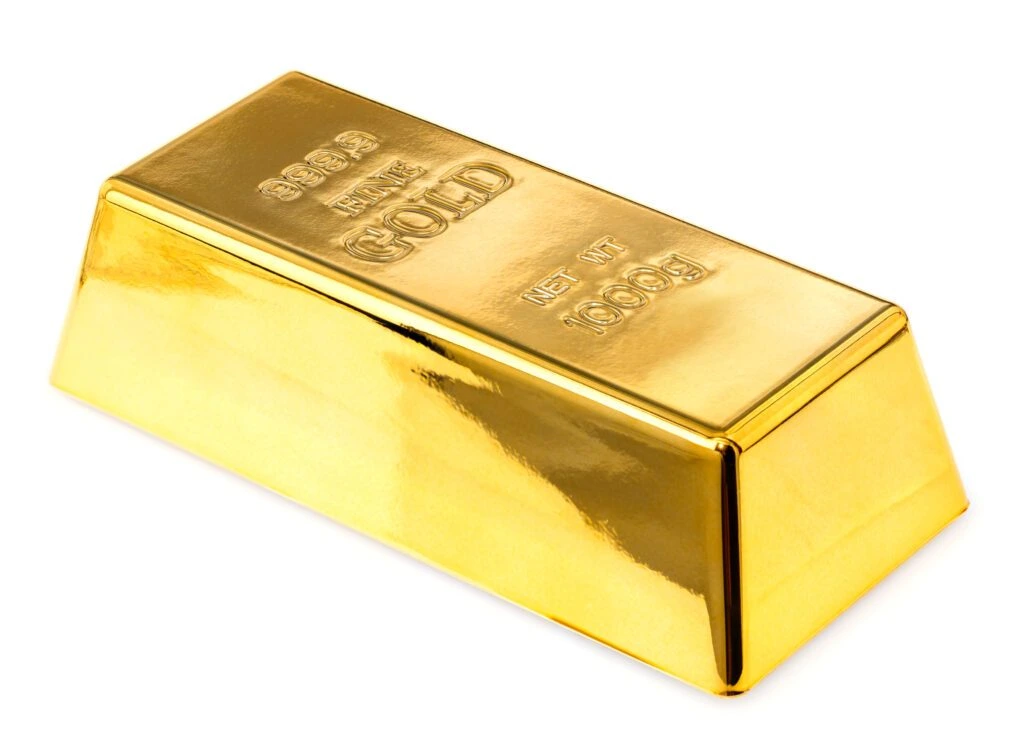
Even just a few tons of gold could generate upwards of $200 million in value, enough to provide some support for clean energy technology without significantly undermining gold’s longstanding value.
There is, however, one major caveat: the fusion-formed gold would be somewhat radioactive at first. Small amounts of unstable isotopes are formed during the metal transmutation process, meaning the gold would require a “cooling period” of roughly 14-18 years before it’s safe to handle and distribute.
Marathon’s leaders don’t see this as a major issue though. Given that much of the world’s gold is held for long-term value storage rather than active use, the delayed circulation may not be a deal-breaker. The freshly-produced gold would likely be sold at a discounted rate until it fully cools.
Cautious Optimism
Marathon’s idea has garnered interest from scientists across the country. After reviewing the company’s study, Dr. Ahmed Diallo, a plasma physicist at the U.S. Department of Energy’s laboratory at Princeton University, told the Financial Times: “On paper it looks great and everyone so far that I talk to remains intrigued and excited.”
Still, significant hurdles remain. The study has not been peer-reviewed yet, and the processes have only been tested through simulations so far. Commercial-scale fusion itself must become a reality before nuclear transmutation of mercury into gold can be economically viable. There will also be logistical challenges, including sourcing enough enriched mercury and developing reactor materials that can withstand the process.
All in all, the concept is very exciting – but we’re still years out from knowing whether it’ll truly work at scale.
Using Gold for Good
Gold has played a huge role in shaping civilization for thousands of years. It served as one of the earliest forms of currency and helped form the foundation of modern financial systems. Today, it’s an essential material for many electronics, from smartphones to satellites, and is even used in life-saving medical technologies.
The idea of using gold to fund clean energy is an inspiring extension of the metal’s legacy. Meeting the world’s growing energy needs in a way that minimizes environmental harm is one of the greatest challenges of our time, and gold could play an unexpected role in that effort!
But on a more immediate level, precious metals already do a lot of good. Proceeds from recycling are often used to support nonprofits, children’s hospitals, cancer research, education initiatives and more. Alongside our partners, Garfield Refining regularly donates to organizations like the Arizona Foundation for Children, Shriners Hospitals for Children, and the Children’s Hospital of Philadelphia.
Several of our dental partners use proceeds from recycled dental scrap to provide free care to underserved patients. We’re also proud participants in the My Heart Your Heart pacemaker recycling program through the University of Michigan, which refurbishes pacemakers for patients in need around the world.
In the Meantime, Keep Recycling
Using modern alchemy to fund clean energy and create gold would be incredible, and we can’t wait to see what unfolds as fusion technology continues to evolve. But until then, one of the best solutions for conserving energy and reducing carbon offsets is recycling. Recycling precious metals helps meet the world’s demand for them while reducing the need for new mining operations and the ecological burdens that come with them.
With precious metal prices at all-time highs, there’s never been a better time to refine any scrap you may have. Whether it’s broken or mismatched jewelry, dental scrap, or even silver flatware, Garfield can help you get the highest return for your metals. We’re known for top payouts, fast turnaround times and exceptional service – that’s why we’ve been voted ‘Best Refiner’ by Dentaltown Magazine for 14 years straight.
Ready to recycle your precious metals? Get started today with a prepaid shipping label!
Written by
Allie BowmanAllie Bowman is the Content Lead at Garfield Refining, where she translates more than 130 years of precious metals expertise into clear, accurate, and practical content for individual sellers, dental professionals, jewelers, and collectors. A Dean's List graduate of the University of Delaware's Media Communication program, Allie has built her career around making complex subjects accessible to a broad audience. Her experience spans nutrition science, lifestyle magazine publishing, and precious metals refining, giving her a unique ability to transform technical information into engaging, trustworthy content. At Garfield, Allie brings editorial rigor and subject-matter expertise to every piece she produces. She works closely with Garfield's refining specialists and senior leadership to ensure that technical topics - from karat markings and assay methods to precious metals markets and spot price mechanics - are explained with both accuracy and clarity. Since joining Garfield's marketing team, Allie has written extensively on precious metals refining, dental scrap recovery, gold and silver bullion, estate and inherited jewelry, and industry-specific topics for dental and jewelry professionals. All content is reviewed by Garfield's leadership team prior to publication, ensuring it reflects the company's standards for accuracy, transparency, and industry expertise.
Reviewed by
Morgan KerrisseyMorgan Kerrissey is the President of Garfield Refining, one of North America's most longstanding and trusted precious metals refineries. For over two decades, Morgan has built his career at the intersection of commodities markets, metallurgy, and precious metals — earning a reputation as one of the most knowledgeable voices in the refining industry. Morgan joined Garfield in 2008, bringing rigorous operational discipline to a company built on exacting standards since 1892. Named President in 2014, he has guided Garfield through volatile gold, silver, and palladium markets, while modernizing its workforce and technologies and diversifying its metal supply chains. Under his leadership, Garfield has expanded its refining capabilities across the full lifecycle of precious metals recovery, entered new markets, and expanded services while maintaining the same customer forward approach that has made Garfield a mainstay for more than a century. From hedging strategy to daily refinery operations, Morgan commands high levels of technical depth and market fluency. Morgan grew up outside Boston, graduated from Harvard University, and has lived with his family in Philadelphia, PA for almost 20 years.