
Last Updated: August 12, 2026
If you work at a dental business that produces precious metal scrap, you may already know that precious metal scrap recycling is both eco-friendly and lucrative. Not only does recycling reduce waste, prevent water contamination and contribute to a circular metal supply chain, but it’s a great way for dentists and dental lab techs to generate extra revenue. Profits from scrap refining can be used to invest in equipment upgrades, boost employee bonuses, pay for company outings and more – the possibilities are endless.
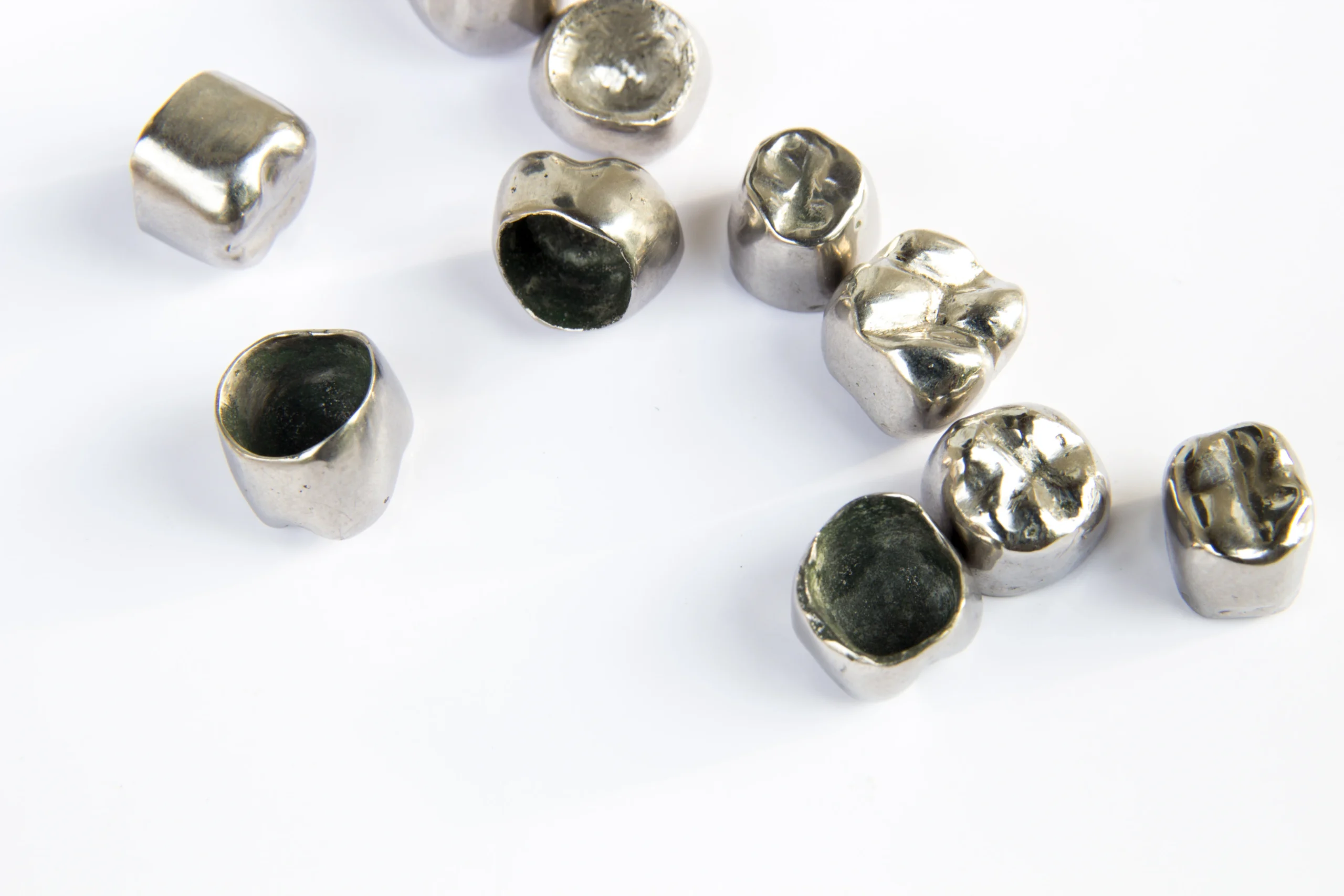
When dental pros hear “precious metal scrap,” extracted crowns and bridges likely come to mind. But there are many other types of valuable scrap that dental offices and labs produce, and some aren’t so obvious. Here are five slightly lesser-known types of scrap that shouldn’t be overlooked!
Inlays and Onlays
Dental inlays and onlays, often referred to as partial crowns, are a type of restoration that is fitted either into (inlay) or onto (onlay) a tooth. They’re used when treatment requires a bit more than a traditional filling, but not quite a full crown. Like crowns and bridges, the original versions of inlays & onlays were predominantly made of gold alloys, before more natural-looking materials like porcelain became popular in the late 20th century.
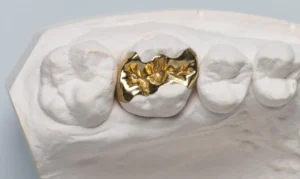
Many inlays and onlays are still crafted from alloys containing gold, platinum and palladium, as these precious metals offer exceptional durability, biocompatibility and a precise fit – all essential qualities for a long-lasting restoration. A gold inlay, for instance, can last 20 years or more with proper care!
Despite the longevity of gold alloys, there are several situations where a dentist may need to remove a gold inlay or onlay. This could, for example, be due to cavities forming around the edge of the inlay, or some sort of damage to the underlying tooth structure. When a gold restoration is extracted during treatment, it’s generally considered scrap material. The scrap can either be returned to the patient or collected for recycling. Many dentists have designated collection containers to store all of their scrap before sending it off to a refinery.
PFMs
PFMs are a type of dental crown in which a metal substructure is attached to a porcelain layer. These became popular in the early 1960s and are still used today. People say that PFMs offer “the best of both worlds” because the precious metal alloy provides great durability, while the porcelain creates a more natural aesthetic. The base component of a PFM often contains valuable precious metals like gold, platinum and palladium.
Just like inlays and onlays, extracted PFMs are a significant source of metal scrap. While there isn’t a large amount of metal in a single PFM, just a few pieces could add up to more than you’d think – especially with today’s metal prices. In fact, PFM crowns are some of the most commonly overlooked scrap items. Chuck Kindler, Associate Director of Garfield Refining’s External Dental Department, explains: “‘I still occasionally hear of offices throwing PFMs away. This is especially common among younger dentists who are just beginning to practice or own their own office and don’t know much about dental refining. Refining isn’t typically covered in dental school, so many dentists are unaware of the value these materials hold.”
Part of the issue is visual. “Practices typically throw them away since they’re not visibly yellow in color, so they assume they have no value. But these might still have silver or palladium, which is certainly valuable,” adds Jess Kolber, Garfield Refining’s Director of Account Services.
Sprues
Sprues are tools used by dental lab technicians during the casting process of dental restorations like crowns, bridges, PFMs, inlays, and onlays. A sprue serves as a channel that allows molten metal to flow into the mold cavity created from a wax pattern of the restoration. Once the metal hardens, the sprue is removed – but it often contains leftover metal, which can be collected and recycled.
Buttons and Solder
A button is a small lump of leftover alloy that’s formed when excess molten metal solidifies at the end of a casting process. When creating a crown, bridge, inlay or onlay, a dental lab technician will often use a bit more metal than necessary, to ensure that the casting mold gets completely filled. Once the mold cavity is filled, the extra metal will pool and solidify in the sprue area. Buttons can be collected and sent to a refinery for recycling.
Solder refers to a lower-melting-point alloy that’s used to connect two of the primary metal components when creating the framework for a bridge, crown or other restoration. After the soldering process is complete, there is often excess solder material left behind that contains precious metals.
Carpet, Vacuum Bags and Sweeps
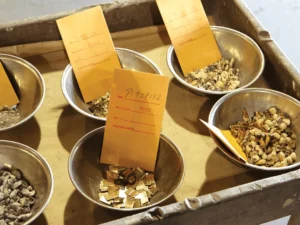
Carpets in the work areas of dental labs, especially grinding and finishing stations, collect precious metal grindings and dust over time. If your lab is disposing of or replacing carpets for any reason, don’t throw them in the trash – send them to a refinery. Otherwise, you could be throwing away extra cash! Even when vacuumed regularly, the carpets can still contain fragments of precious metals.
Speaking of vacuuming, there could also be hidden value hiding among the dirt and dust inside your vacuum bags. Precious metal contents of vacuum bags can be extracted, purified and recycled with the expertise of a refinery like Garfield Refining. In fact, we have a convenient Vac Bag Swap Program designed specifically for our dental lab clients. When your bag is full, we’ll send you a new one (for free). Then you can ship us your old bag and get paid for the precious metals!
Selling Your Scrap for Maximum Value
Gold crowns, bridges, PFMs, inlays and onlays are commonly sought after by many types of gold buyers. But if a buyer doesn’t also accept items that are considered “low-grade” materials, like vacuum bags and carpet, they’re not the real deal – and they won’t be able pay you the full value of your scrap.
Non-refinery gold buyers act as intermediaries who ultimately sell the material to a refinery, building their own fees into your payment to protect their margins. On the other hand, reputable refineries like Garfield have the technology and expertise to recover maximum precious metal yields from your scrap – without the middleman fees.
Garfield: America’s Favorite Dental Refiner
With over 130 years of expertise, Garfield Refining is North America’s trusted precious metals refinery. Our skilled technicians ensure the highest return for your metals, with our assay lab manager overseeing operations for 20+ years. While we proudly serve a variety of industries, we’re known for excellence in dental refining – that’s why we’ve been voted ‘Best Scrap Metal Refiner’ by Dentaltown Magazine for the past 14 years straight!
If you’d like to refine extracted dental material, grindings, vacuum bags, carpet, sprues, buttons, or another form of dental scrap, get started today by downloading a free shipping label!
We also accept karat jewelry, gold and silver coins, antique silverware and more. Look no further than Garfield for all of your refining needs!
Written by
Allie BowmanAllie Bowman is the Content Lead at Garfield Refining, where she translates more than 130 years of precious metals expertise into clear, accurate, and practical content for individual sellers, dental professionals, jewelers, and collectors. A Dean's List graduate of the University of Delaware's Media Communication program, Allie has built her career around making complex subjects accessible to a broad audience. Her experience spans nutrition science, lifestyle magazine publishing, and precious metals refining, giving her a unique ability to transform technical information into engaging, trustworthy content. At Garfield, Allie brings editorial rigor and subject-matter expertise to every piece she produces. She works closely with Garfield's refining specialists and senior leadership to ensure that technical topics - from karat markings and assay methods to precious metals markets and spot price mechanics - are explained with both accuracy and clarity. Since joining Garfield's marketing team, Allie has written extensively on precious metals refining, dental scrap recovery, gold and silver bullion, estate and inherited jewelry, and industry-specific topics for dental and jewelry professionals. All content is reviewed by Garfield's leadership team prior to publication, ensuring it reflects the company's standards for accuracy, transparency, and industry expertise.
Reviewed by
Morgan KerrisseyMorgan Kerrissey is the President of Garfield Refining, one of North America's most longstanding and trusted precious metals refineries. For over two decades, Morgan has built his career at the intersection of commodities markets, metallurgy, and precious metals — earning a reputation as one of the most knowledgeable voices in the refining industry. Morgan joined Garfield in 2008, bringing rigorous operational discipline to a company built on exacting standards since 1892. Named President in 2014, he has guided Garfield through volatile gold, silver, and palladium markets, while modernizing its workforce and technologies and diversifying its metal supply chains. Under his leadership, Garfield has expanded its refining capabilities across the full lifecycle of precious metals recovery, entered new markets, and expanded services while maintaining the same customer forward approach that has made Garfield a mainstay for more than a century. From hedging strategy to daily refinery operations, Morgan commands high levels of technical depth and market fluency. Morgan grew up outside Boston, graduated from Harvard University, and has lived with his family in Philadelphia, PA for almost 20 years.