

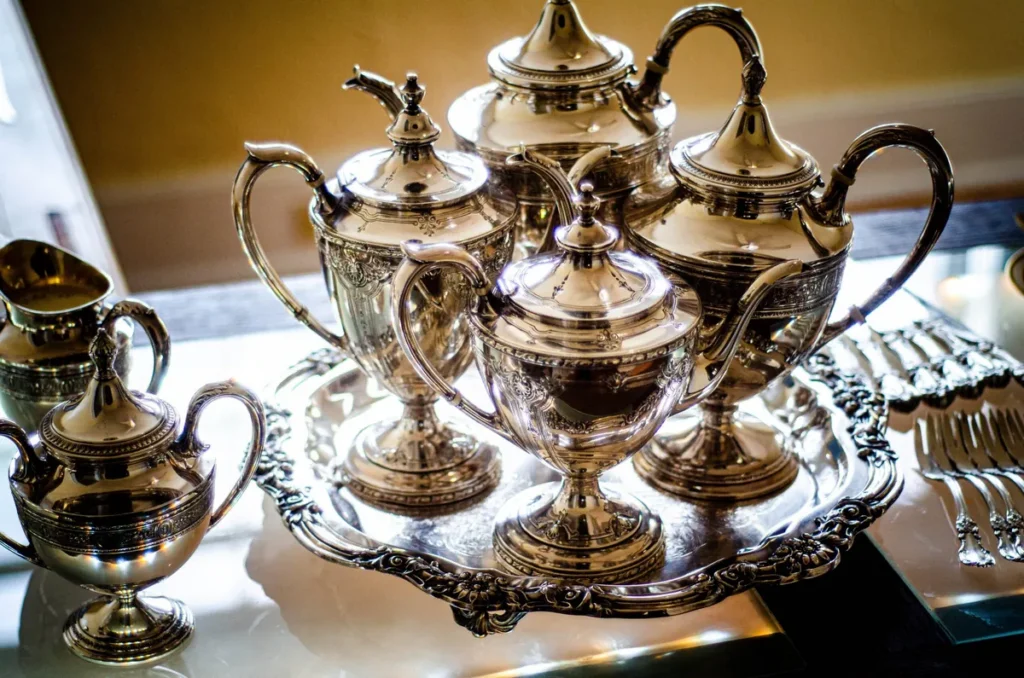
No single home test can guarantee that an item is real silver, but checking for a stamp, holding a magnet to it and setting an ice cube on it can rule out most fakes in a few minutes. Here’s everything you need to know if you’re testing your silver at home.
First, A Quick Note on Sterling Silver
Sterling silver is an alloy made of 92.5% silver and 7.5% other metals (usually copper). It’s one of the most common alloys used for jewelry and tableware because it offers the ideal balance of purity and strength. Pure silver – which is often used for bullion coins and bars – is soft and can be easily scratched or dented. When assessing silver items at home, chances are you’re looking for sterling silver.

Look for Stamps
A purity stamp is a good sign that a silver item is authentic. Common stamp variations include:
- 925, Sterling or STER (92.5% pure): common for jewelry, flatware, and home décor items like candleholders and trays
- 999 or Fine (99.9% pure): most common for bullion items like coins or bars
- 900 or COIN (90% pure): indicates coin silver; common for antique flatware and utensils, hollowware like cups, pitchers and bowls, and jewelry/accessories
Keep in mind that a “925” or “Sterling” stamp alone doesn’t guarantee that an item is genuine sterling silver. Although federal regulations prohibit falsely advertising items as sterling silver, counterfeit pieces can still bear misleading stamps.
Silver is Not Magnetic
Silver is not magnetic, and neither is gold. In fact, none of the precious metals are magnetic in their pure form. The magnet test can rule out fakes, but it doesn’t necessarily confirm real silver. Some fakes are non-magnetic.
Silver is weakly repelled by magnets, so a strong magnet should not grab a solid silver item at all. To test your item, use a strong neodymium magnet, as weaker fridge magnets can miss slightly magnetic fakes. Hold your item close to the magnet and watch for attraction. If the item jumps or clings to the magnet, it’s not pure silver, or even sterling silver for that matter. (While sterling silver often contains some copper, copper is not magnetic either.)
Because silver conducts electricity so well, a strong magnet sliding down a tilted silver bar will be slowed by eddy currents. The magnet will move down a silver bar significantly slower than a glass or wood object. Seeing this slower sliding movement is a good clue that your silver is real. However, other metals can produce this same effect, so the results are a helpful clue rather than definitive proof of real silver.
The Ice Test
Silver conducts heat better than any other metal, so a piece of ice set on a real silver bar, coin or tray will melt noticeably faster than it would on stainless steel or silver-plated base metal. Copper also conducts heat well, so a fast melt is a good sign, but not proof.
Weight and Feel
Silver is denser than aluminum, steel and most base metals, so a solid piece feels heavy for its size.
If you have a coin or a bar, you can weigh it and compare with published specifications for your item, most of which can easily be found online.
Color and Signs of Tarnish
Rubbing real silver with a soft white polishing cloth usually leaves a gray or black mark from tarnish. Plated silver tarnishes too, so this only rules things out. Check edges, crevices and the backs of pieces: yellow, copper or gray metal showing through means that plating has worn off.
Silver is the most reflective metal known to man, making it very bright and shiny. While older items may be tarnished, genuine silver can always be restored back to its natural shine with proper care.
Home Tests that Probably Aren’t Worth It
Acid testing can damage the surface of your item, so it’s better not to try that at home.
The “ping” test is also popular, especially for silver coins. This method involves assessing the acoustics by gently striking a silver item. However, it can be hard to gauge the validity of an item’s “ping” sound without having a known silver piece to compare against.
Silver, White Gold, or Platinum?
Silver, white gold and platinum are all bright, shiny, silvery metals that can look the same to the naked eye. Luckily, genuine white gold and platinum items will likely have a stamp. Look for one of the following:
- 10K, 14K or 18K for white gold
- PT, PLAT, PT950 or 950 Plat for platinum
Platinum is roughly twice as dense as silver, so a platinum ring will feel much heavier than a silver ring of the same size.
Are Silver-Plated Items Worth Selling?
Silver-plated items are generally not worth selling for scrap value. They contain only a thin plating of silver on the surface, while the core is often made of base metals like copper, brass, nickel, or another alloy. A few common stamps that indicate an item is plated include EP, EPNS, and Silver Plate.
While some plated items may hold sentimental value, they do not hold significant value in terms of the metal itself. Refineries like Garfield Refining do not accept plated items because the silver coating is so thin that the amount of recoverable precious metal is minuscule.
German Silver is Not Real Silver
If an item is marked as “German Silver” or “Nickel Silver,” it doesn’t actually contain any silver. German silver is an alloy made primarily of copper, nickel, and zinc. It became popular in the 19th century as a cheaper alternative to genuine silver and is still used in costume jewelry, tableware, and decorative items.
When in Doubt, Consult a Professional
If you’re simply curious about your items and their metal composition, a jeweler can test them with an acid kit or an XRF analyzer. But if you’re hoping to sell your items and get the highest possible payment, a precious metals refinery like Garfield will perform a melt and assay, which measures exactly how much silver is there.
A professional assay at a refinery ensures the most accurate evaluation of your silver, and it’s the best way to avoid the extra fees that middleman buyers charge. Garfield has specialized in refining precious metals since 1892, and we’re known for industry-leading payouts and award-winning customer service.
Frequently Asked Questions
Can fake silver be stamped 925?
Unfortunately, yes. Sometimes fake silver is marked with a “925” stamp. True silver content is best confirmed by a professional assay.
Is sterling silver magnetic?
Sterling silver is not magnetic. It’s an alloy of 92.5% silver and 7.5% other metals, usually copper, and neither silver nor copper is magnetic.
Garfield Refining has been refining precious metals since 1892. We’ll get you the best value for precious metals, and the process couldn’t be easier.
Written by
Allie BowmanAllie Bowman is the Content Lead at Garfield Refining, where she translates 134 years of precious metals expertise into clear, accurate, and practical content for individual sellers, dental professionals, jewelers, and collectors. A Dean's List graduate of the University of Delaware's Media Communication program, Allie has built her career around making complex subjects accessible to a broad audience. Her experience spans nutrition science, lifestyle magazine publishing, and precious metals refining, giving her a unique ability to transform technical information into engaging, trustworthy content. At Garfield, Allie brings editorial rigor and subject-matter expertise to every piece she produces. She works closely with Garfield's refining specialists and senior leadership to ensure that technical topics - from karat markings and assay methods to precious metals markets and spot price mechanics - are explained with both accuracy and clarity. Since joining Garfield's marketing team, Allie has written extensively on precious metals refining, dental scrap recovery, gold and silver bullion, estate and inherited jewelry, and industry-specific topics for dental and jewelry professionals. All content is reviewed by Garfield's leadership team prior to publication, ensuring it reflects the company's standards for accuracy, transparency, and industry expertise.
Reviewed by
Morgan KerrisseyMorgan Kerrissey is the President of Garfield Refining, one of North America's most longstanding and trusted precious metals refineries. For over two decades, Morgan has built his career at the intersection of commodities markets, metallurgy, and precious metals — earning a reputation as one of the most knowledgeable voices in the refining industry. Morgan joined Garfield in 2008, bringing rigorous operational discipline to a company built on exacting standards since 1892. Named President in 2014, he has guided Garfield through volatile gold, silver, and palladium markets, while modernizing its workforce and technologies and diversifying its metal supply chains. Under his leadership, Garfield has expanded its refining capabilities across the full lifecycle of precious metals recovery, entered new markets, and expanded services while maintaining the same customer forward approach that has made Garfield a mainstay for more than a century. From hedging strategy to daily refinery operations, Morgan commands high levels of technical depth and market fluency. Morgan grew up outside Boston, graduated from Harvard University, and has lived with his family in Philadelphia, PA for almost 20 years.