
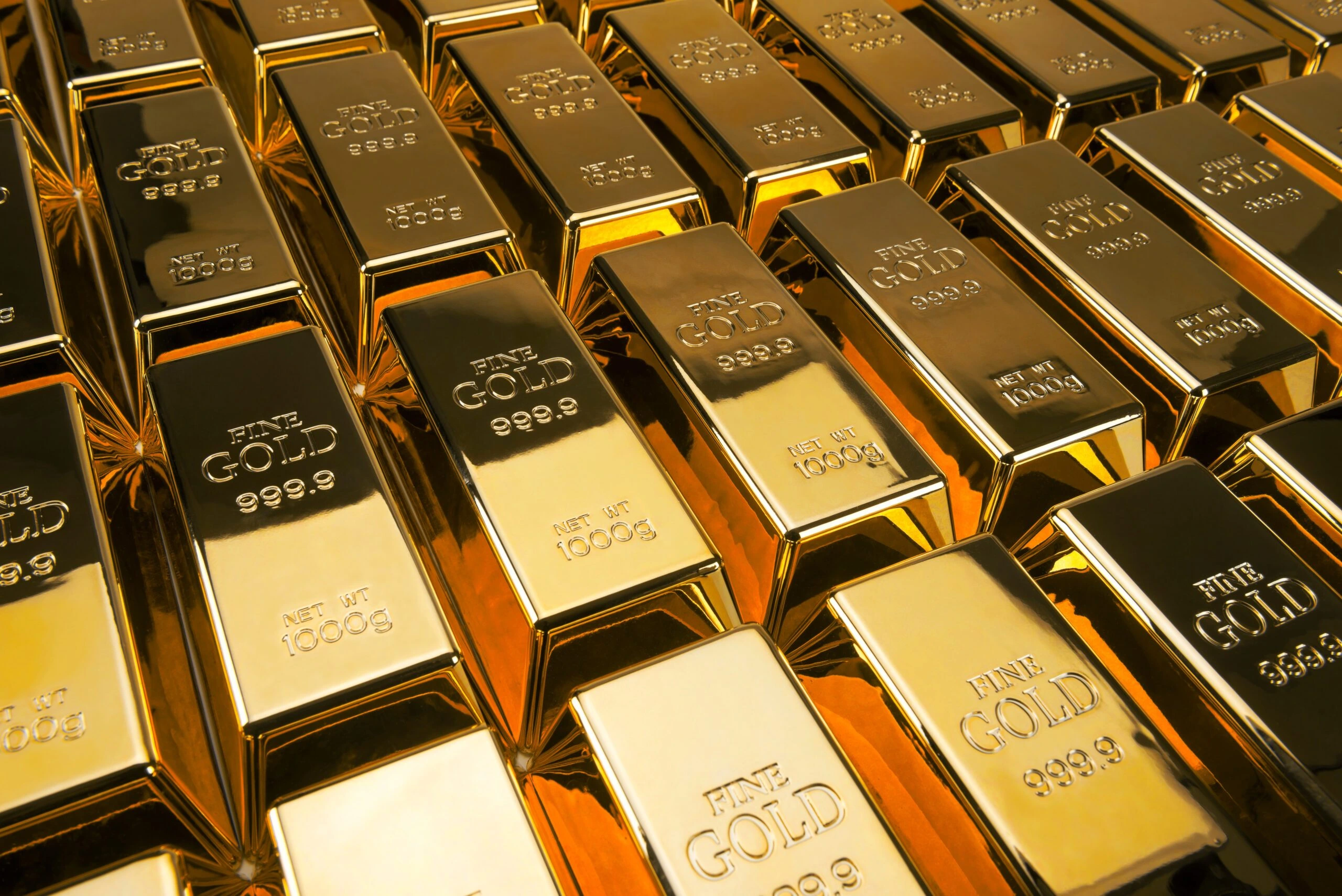
Gold’s tremendous prices have been flooding headlines lately. 2024 was a milestone year for gold, and the momentum has propelled into 2025. Prices have already broken over 10 record highs since January. The metal just surpassed $2,936 per ounce this month and is forecasted to reach $3,000 per ounce within the year! It’s certainly an exciting time for investors and gold enthusiasts.
How Much Gold is in Fort Knox Today?
When gold is a hot topic, so is our country’s most famous bullion depository. After all, it’s hard not to be intrigued by such a massive amount of gold in one place. The U.S. Bullion Depository, aka Fort Knox, is said to be one of the most secure places on Earth.
However, people naturally wonder from time to time whether all of the gold is still there – especially when major figures like the president call things into question on social media. So, is there really any gold missing from Fort Knox?
When was Fort Knox Built?
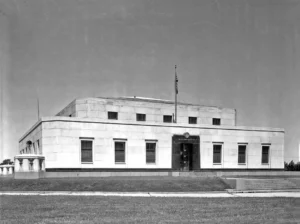
Located in Kentucky, Fort Knox is one of the largest gold repositories in the world, housing an estimated 147.3 million ounces of the United States’ gold reserves. According to the U.S. Mint, that’s about half of the U.S. Treasury’s total gold.
The U.S. Mint established the Fort Knox Bullion Depository in 1936 to keep up with the country’s growing gold reserves. By December of that year, the building was complete with 16,000 cubic feet of concrete and 750 tons of reinforced steel. The cost of construction totaled $560,000.
Fort Knox received its first shipment of gold in 1937 from the Philadelphia Mint and New York Assay Office. The shipment came in by train, surrounded by military troops for protection. The highest historic gold holdings at Fort Knox were nearly 650 million troy ounces on December 31st, 1941.
How Secure is Fort Knox?
Fort Knox is famous for its tight security. The gold reserves are stored within massive granite walls, a bomb-proof roof and a 22-ton vault door. Few people, even U.S. presidents, have seen the gold stores firsthand. The actual structure and content of the facility is only known by a few people, and no single individual knows all of the procedures to open the vault.
President Franklin D. Roosevelt was the only person outside of normal security personnel permitted to see the gold reserves up until 1974, when a group of journalists viewed the vaults. Journalists were granted access to quell persistent rumors that all of the gold in Fort Knox had been removed. (Sound familiar?) They found that the gold was still there.
Then in 2017, the vaults were opened again for a few select visitors. Treasury Secretary Steve Mnuchin, Kentucky Governor Matt Bevin, and a few Congressional representatives viewed the vaults that year.
Is All the Gold Still There?
While we can’t physically see the gold at Fort Knox for ourselves, officials from the U.S. Mint and the Treasury have confirmed that it’s all still there, safe and sound. In a talk show interview, Treasury Secretary Scott Bessent stated “We do an audit every year. All the gold is still present and accounted for.”
With impenetrable security and many jobs on the line, it’d be pretty shocking if any gold were actually stolen from Fort Knox. As forementioned, the facility stores about half of the U.S. Treasury’s stored gold – about 147.3 million ounces. Over the decades, the only gold removed has been small samples used to test during periodically scheduled audits.
U.S. Gold Holdings
In addition to Fort Knox, the U.S. Mint stores gold in its Denver and West Point facilities. The Federal Reserve Bank of New York also holds a substantial amount of gold, both foreign and domestic.
The U.S. ranks first among countries with the largest gold reserves (~261.1 million ounces), followed by Germany, Italy, and France. U.S. gold reserves are still valued at a fixed price of $42.22 per ounce, per the Bretton Woods system. But if the gold was valued at today’s market prices (as of February 2025), it would be worth over $700 billion!
Stay tuned to our blog for more insights on precious metals. Check out other fun articles like The Top 3 Most Popular Gold Rush Ghost Towns, The Major Factors That Drive the Gold Price and 3 Fun Facts about Platinum.
Garfield Refining has been refining precious metals since 1892. We’ll get you the best value for your gold, silver, platinum, and palladium, and we have the industry’s best customer service.
Looking to sell your precious metal scrap? Download a free shipping label to get started today!
Written by
Allie BowmanAllie Bowman is the Content Lead at Garfield Refining, where she translates more than 130 years of precious metals expertise into clear, accurate, and practical content for individual sellers, dental professionals, jewelers, and collectors. A Dean's List graduate of the University of Delaware's Media Communication program, Allie has built her career around making complex subjects accessible to a broad audience. Her experience spans nutrition science, lifestyle magazine publishing, and precious metals refining, giving her a unique ability to transform technical information into engaging, trustworthy content. At Garfield, Allie brings editorial rigor and subject-matter expertise to every piece she produces. She works closely with Garfield's refining specialists and senior leadership to ensure that technical topics - from karat markings and assay methods to precious metals markets and spot price mechanics - are explained with both accuracy and clarity. Since joining Garfield's marketing team, Allie has written extensively on precious metals refining, dental scrap recovery, gold and silver bullion, estate and inherited jewelry, and industry-specific topics for dental and jewelry professionals. All content is reviewed by Garfield's leadership team prior to publication, ensuring it reflects the company's standards for accuracy, transparency, and industry expertise.
Reviewed by
Morgan KerrisseyMorgan Kerrissey is the President of Garfield Refining, one of North America's most longstanding and trusted precious metals refineries. For over two decades, Morgan has built his career at the intersection of commodities markets, metallurgy, and precious metals — earning a reputation as one of the most knowledgeable voices in the refining industry. Morgan joined Garfield in 2008, bringing rigorous operational discipline to a company built on exacting standards since 1892. Named President in 2014, he has guided Garfield through volatile gold, silver, and palladium markets, while modernizing its workforce and technologies and diversifying its metal supply chains. Under his leadership, Garfield has expanded its refining capabilities across the full lifecycle of precious metals recovery, entered new markets, and expanded services while maintaining the same customer forward approach that has made Garfield a mainstay for more than a century. From hedging strategy to daily refinery operations, Morgan commands high levels of technical depth and market fluency. Morgan grew up outside Boston, graduated from Harvard University, and has lived with his family in Philadelphia, PA for almost 20 years.